
March of the Machine has been out in the wild for little while now, and it’s definitely made its mark as a really powerful set for Pauper Commander. There are an impressive amount of functional reprints of powerful effects, new twists on old favorites, and some novel designs at the common level. As far as creatures to occupy the command zone, there wasn’t much that really excited me. The biggest thing that pulls me in, as far as commander options go, is the ability of a card to recontextualize portions of the card pool – cards that make you look at a previously underrepresented card or effect and say to yourself, “Well that sure seems good.” While the set has no shortage of obviously powerful commanders, the only one that really struck me was Xerex Strobe Knight. I had the good fortune to open one during the pre-release event I attended, and boy howdy was it an impressive card, even in a general context. After playing a bunch with it that day in my sealed deck, I was pretty sold on translating it into a full-fledged Pauper Commander deck.
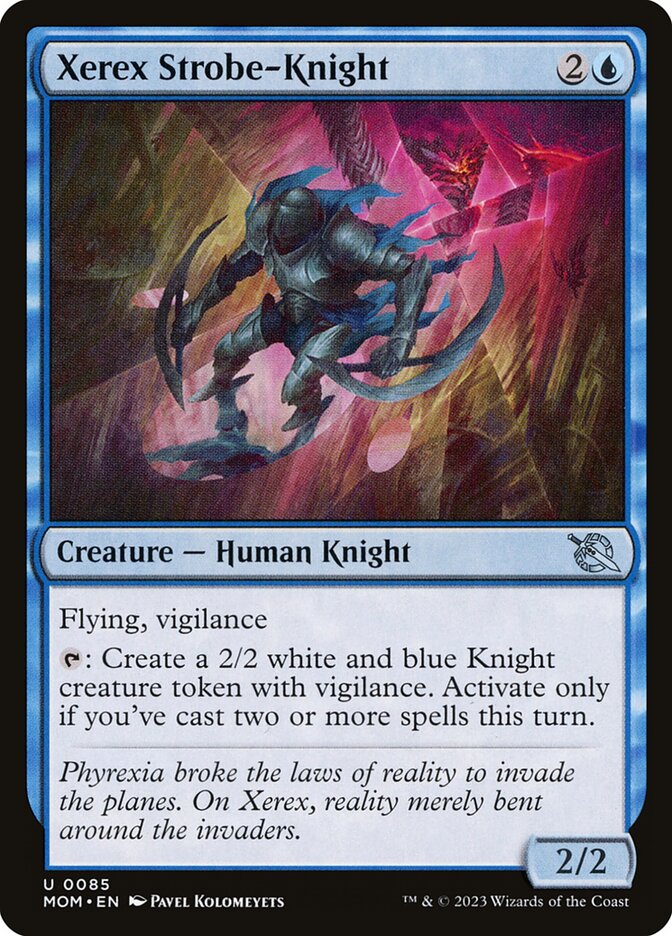
Commanders that bring underrepresented cards and effects into the spotlight are always my favorite to explore, Pauper or not. In this particular case, the single card that best represents an entire class of effects that usually goes unseen is Twiddle. It’s an exceedingly simple thing to do – either tap or untap a single creature. In the case of Xerex Strobe Knight, however, that specific effect printed onto a blue instant is exactly the right confluence of factors to show just how powerful they can be when their potential is fully unlocked.
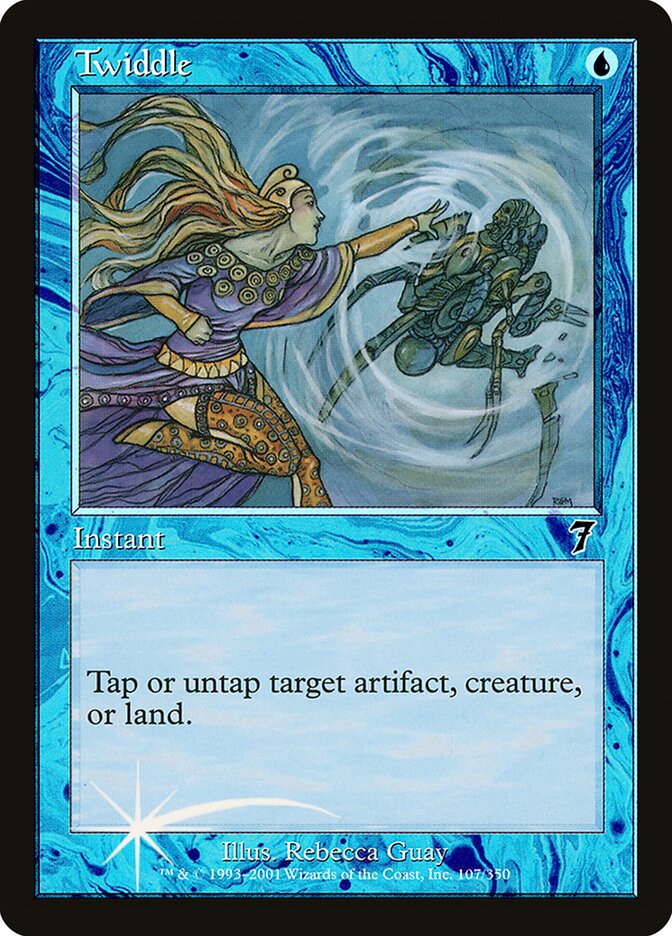
Twiddle is a very innocuous card, and the same is true for its many analogs. The act of tapping/untapping permanents is actually a very powerful thing to be doing in a lot of different strategies, but the fact that it’s an instant with a one-time use is something that causes it to fall by the wayside in favor of cards like Clever Conjuror, where that same effect is repeatable. However, with Xerex Strobe Knight, which turns on once we have cast two spells, the untap effects on instants start to look a lot more appealing, since they would count towards that threshold, and we can execute some shenanigans with holding priority to really maximize the use of these cards. Consider the following play pattern:
- Untap with Xerex Strobe Knight.
- Cast any spell
- Holding priority, cast Twiddle (or analog) targeting Xerex Strobe Knight.
- Two spells have now been cast, tap to create a token.
- Twiddle resolves, untapping Xerex Strobe Knight
- Tap to create a token.
- Initial spell resolves.
As you can see, with a single Twiddle effect, along with any other spell, we can tap our commander to generate two Knight tokens. Once we establish that this is a pattern that we want to maximize, we open up a lot of options to further tailor our overarching game plan.
Maximizing activations


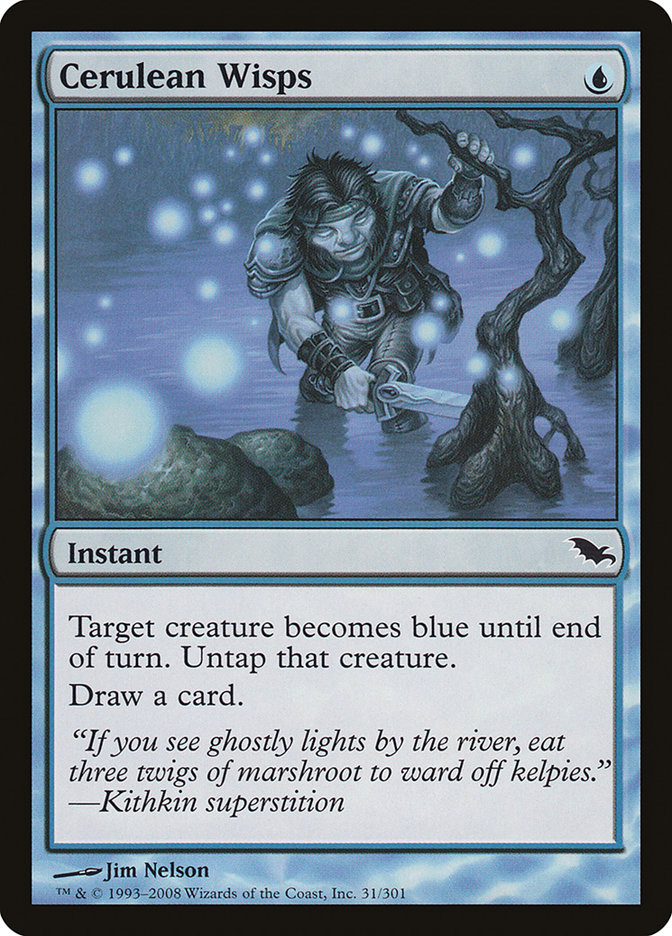
In terms of producing as many Strobe Knight activations/tokens as possible, we are going to rely heavily on Twiddle effects first and foremost. There are actually a surprising amount of them that have been printed through the years, and we want to play as many as possible here. The most important thru-line with these cards is the fact that they are all instant-speed. We can therefore build our deck to primarily function on that axis. Coupling Twiddles with any one or two mana instant lets us just start generating knight tokens whenever we want, and the ability to generate tokens of that size and utility (2/2 creatures with vigilance) either proactively or reactively plays a lot more powerful than it may read. We get the benefit of being able to hold up interaction while also being able to develop our board state – having our cake and eating it, too.
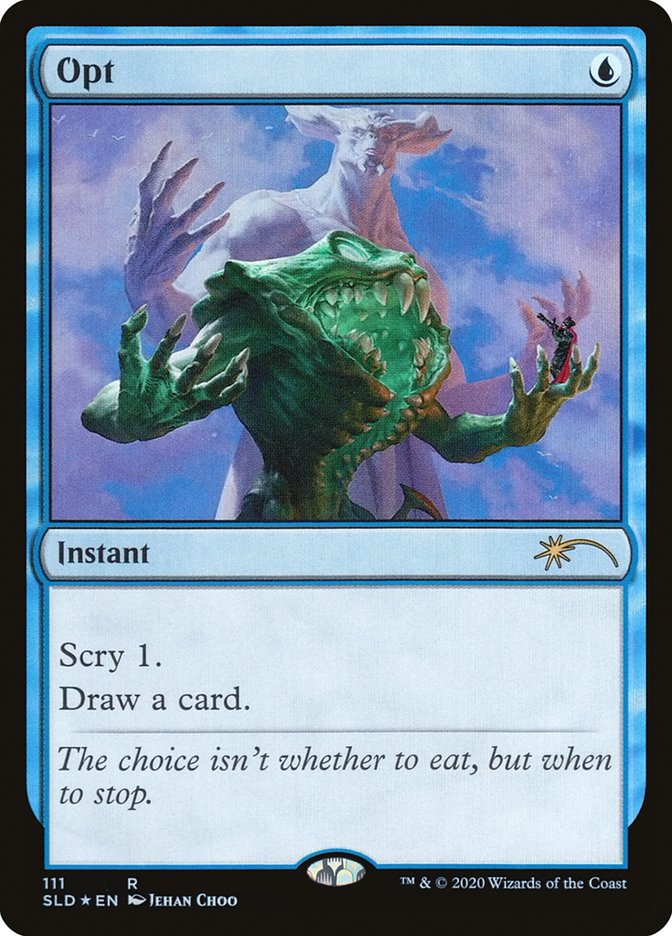
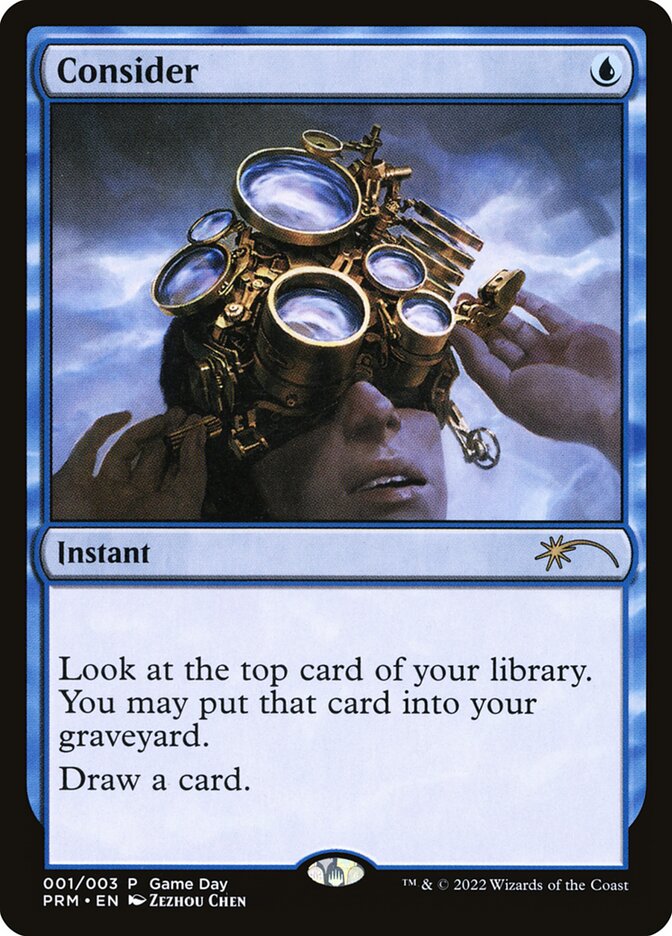
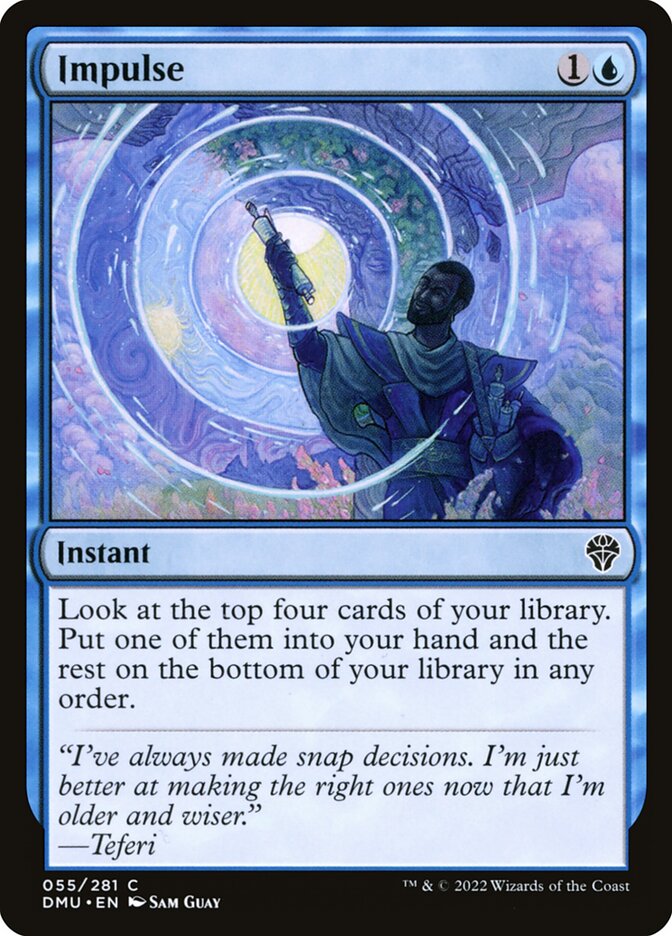
Instant speed cantrips are obviously bread-and-butter here since they help us churn through our deck while providing ancillary resource advantage by turning on Strobe Knight. The thing about cantrips is that they can often be pretty mopey in a 100-card singleton format but become much more impressive when they pull double duty. In this context, they often provide some card selection, replace themselves, and add to our spell count in a way that doesn’t cause a significant resource deficit, letting us keep pumping out knight tokens over a longer period of time. Instants are important in this role because the flexibility of being able to turn on Strobe Knight and generate tokens on a whim is a really Cool and Fun thing to be doing.
In terms of playing reactively, casting an instant speed cantrip into a Twiddle is a solid play pattern if we aren’t required to actually cast any interactive spells. This deck is really good at being able to hold up its mana and leverage Strobe Knight when advantageous. When the turn cycle is about to make its way back to us, if we haven’t been forced to use any interactive spells by that point, this is a great way to generate a few extra tokens for us to attack with when it comes back around to being our turn. That said, cantrips aren’t the only things we can hold up mana for. Similar to cantrips, counterspells are also Spells. They, too, will count towards the spell count for Xerex Strobe Knight. A timely Twiddle on the back of an interactive spell is a great way to generate tempo, and finding those reactive spells that keep the wheels moving either by replacing themselves or providing resources in other ways can put us pretty far ahead of the table.
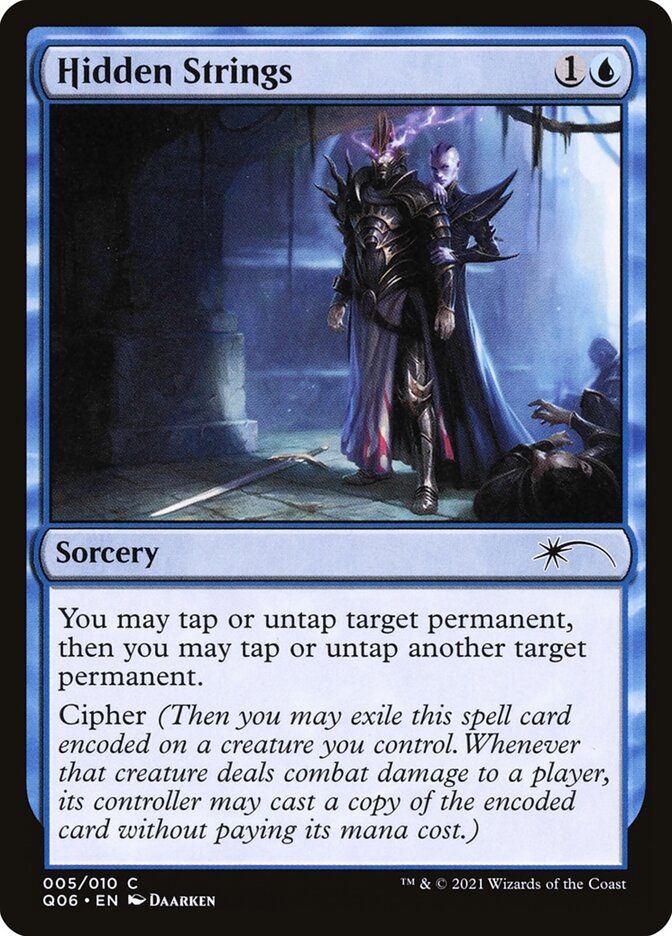
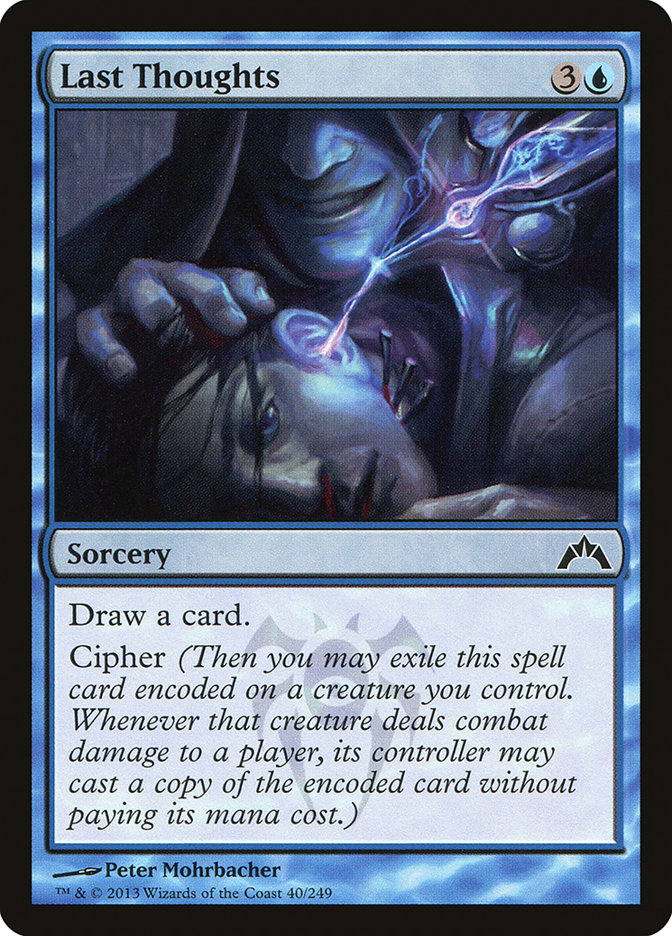
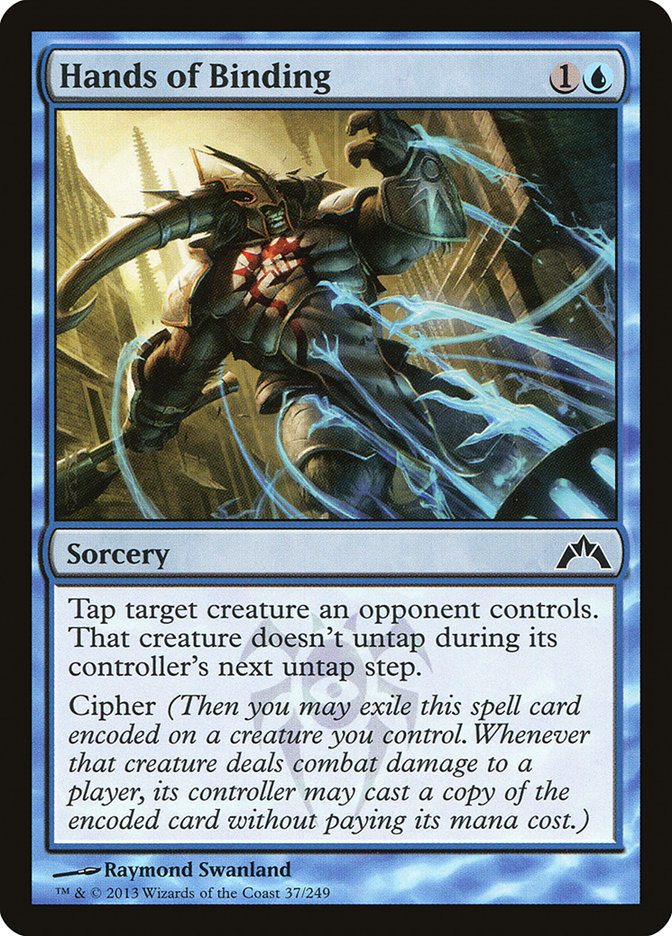
One underappreciated mechanic that works overtime here is cipher. For these spells, once they resolve, they are exiled and “encoded” onto a creature. Whenever that creature goes on to deal combat damage to a player, we get to create a copy of that encoded spell and cast it. Because we are casting that copy, these count towards reaching that two-spell threshold for Strobe Knight. This mechanic is a great way to buffer the amount of spells we have access to every turn, regardless of how many we have in our hand. It doesn’t hurt that the spells we’re encoding onto our Strobe Knight are all really great in their own right. Hands of Binding keeps problematic creatures locked down, Last Thoughts lets us draw an additional card, and Hidden Strings just goes off the rails and dominates the game by not only untapping our Strobe Knight and getting us a free token, but also can untap our lands as well to provide additional mana we can keep up for interaction. It’s a standout among standouts and probably the single best card in the deck.
Knights
So we’re obviously going to be making a ton of knight tokens. Because they have vigilance, our ability to attack with them and then further leverage them in other ways provides a lot of context into how we can use them to further shape the game.
First, we can really just attack people with impunity, and this manifests two-fold. First, with the ease by which we can create them, there really isn’t any reason not to just run them all into someone every turn we’re able to. We have a lot of freedom to make otherwise disadvantaged attacks simply to push extra damage, and I think the big trick with piloting a deck like this is understanding that these tokens are by no means sacred – they’re actually super expendable and are able to dish out a surprising amount of damage. Second, these things have vigilance. Vigilance is an incredibly powerful ability in Pauper Commander specifically because it’s a format that is very centered on the battlefield and exchange of resources through combat. Additionally, by virtue of being a multiplayer format, any expenditure of a tapped and attacking creature means that creature will not be able to block for the next three combat steps until we are able to untap. While these knight tokens are very effective offensive tools, they are just as powerful on defense. Again, these tokens are expendable. Once our opponents see just how easy it is to replenish our supply, the threat of an easy double or triple block can go a long way to dissuade attackers coming our way.
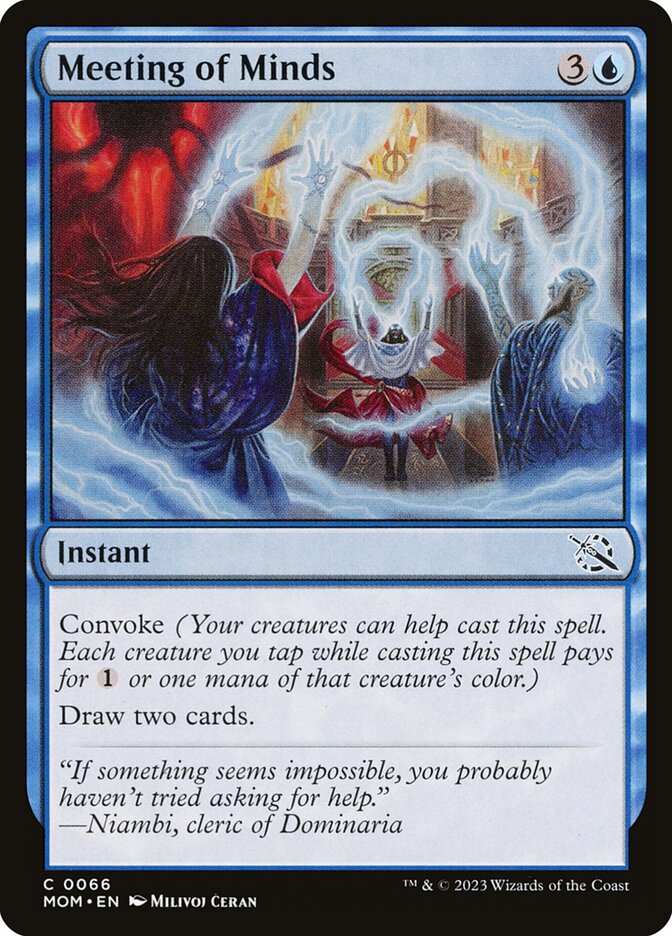


Vigilance also comes in handy by allowing us to use our tokens in combat, and then use them as resources through other means. Cards with convoke or conspire, for example, generally force players to sacrifice offensive pressure to fully unlock their efficiency. Not so, here. We can attack with a full board of knights and still be able to fully convoke a Meeting of Minds or Temporal Cleansing. We still get to conspire a Ghastly Discovery. Leveraging our creatures this way gives us a powerful tempo advantage over our opponents exactly because the combat step is such an important aspect of Pauper Commander games.
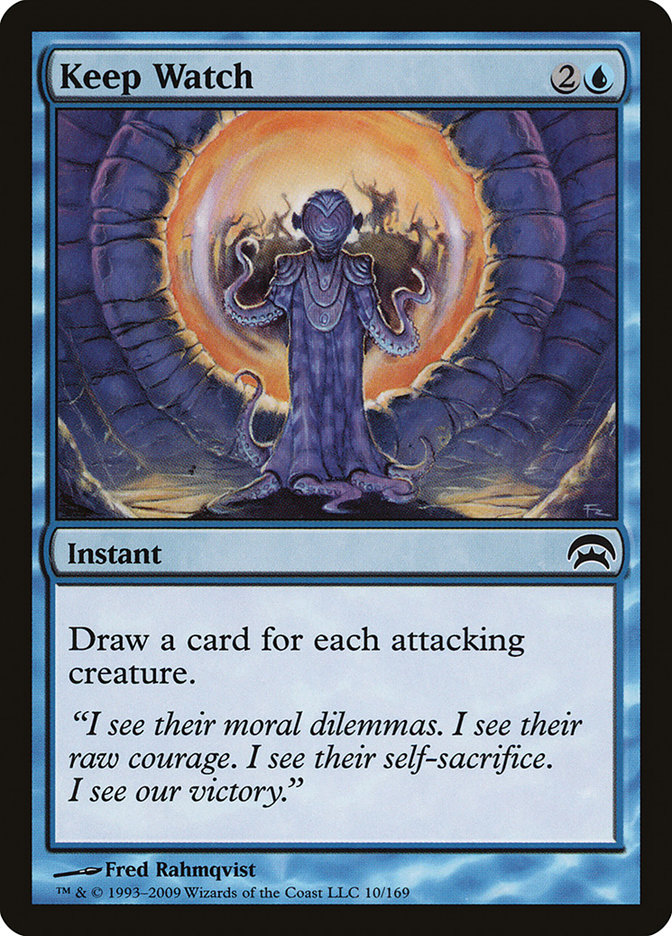
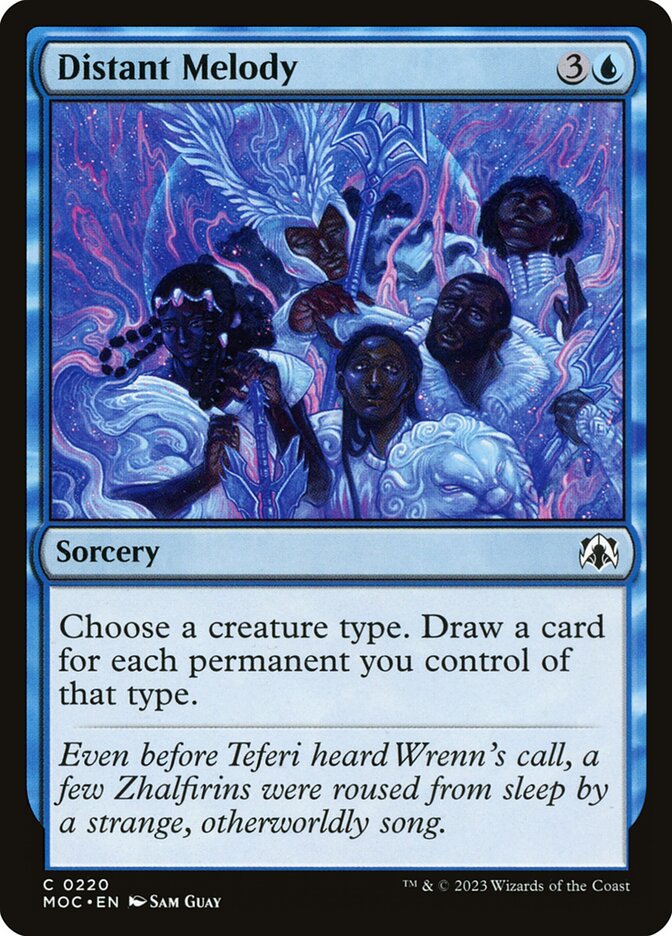
But when it comes to really pulling ahead, there are two incredibly powerful tools at our disposal that we can use to really shoot the moon, both keyed in on our ability to generate these aggressively statted knight tokens. Keep Watch is a card that is already a format all-star. Oftentimes, its most powerful uses stem from casting it in response to a wide attack from an opponent. In this deck, we are generating such a wide board of creatures and have a lot more control over when we’re casting this for a high volume of cards. The kicker here is that because these knight tokens are a bit bigger than the average token, they are tougher to tangle with in combat and we’re more likely to come out on the other side with most of our board intact, unlike other decks that utilize this card alongside a mass of 1/1 creatures. Distant Melody is also just an obvious inclusion here. With how easily we can generate such a high quantity of tokens, this will usually draw between 7-10 cards per cast. It’s always good and will always give you a full grip of cards, and then some. I had the pleasure of playing a game recently where I was able to draw about 30 cards off three separate Distant Melody casts and it felt like cheating (but oddly didn’t feel as good as going five for five off of a Lead the Stampede).

One last card I want to mention here as a way to really put our tokens to work is Larder Zombie. This is a card that I am very high on in general, and in this deck it generates a truly impressive amount of value. Being able to attack and block with our tokens and still find ourselves able to surveil between one and three times a turn cycle is something that is extremely powerful and often overlooked. Larder Zombie is just a really good way to make sure that we are milking every ounce of value out of our tokens, and it is a workhorse in a ton of Pauper Commander decks, while shining super bright here.
Interaction
At this point things are pretty academic – we have ways to untap Strobe Knight to produce a bunch of tokens, we have some cantrips to smooth out our draws and a couple big draw spells to keep everything fueled up and running smoothly. From here, we just need to salt-to-taste, as it were, and find ways to win the damage race. Interactive spells that generate tempo for us do some pretty heavy lifting. We don’t need to be controlling threats super closely, but we do need to be able to identify which threats we should be concerned about and interact specifically with them when we need to. The key to winning damage races is simply to keep our opponents just off-balance enough to where we can cross the finish line – it doesn’t matter if it’s by an inch or a mile.
Being judicious with interaction is imperative, particularly since it is easy for other players to look at what this deck is doing and see it as something of an arch-enemy, or The Threat. Remember that because our tokens have vigilance, we get to assume a naturally defensive position, and really the only threats we need to worry about are those that have evasion and ignore the defensive capacity of our tokens. Thus, we don’t really need to overload on interaction, but just make sure we have a few pieces to pick up some tempo against those players that are able to race us with evasive threats. Strobe Knight is uniquely situated to capitalize on these windows of interaction, since we can simply chain that piece of interaction into any other spell and create a token to speed up our clock. This dynamic of being able to string together interactive spells into significant tempo and resource advantage makes this deck very difficult to meaningfully interact with.
It’s also important to keep in mind that many of the spells we will use to untap Xerex Strobe Knight also have the ability to tap a creature, so we always have a good avenue to lock down a particularly problematic attacker or blocker should we find that necessary. It’s easy to overlook this functionality since the cards are so clearly best utilized as a method to generate tokens with Strobe Knight, but that modality can provide a huge edge in a close game.

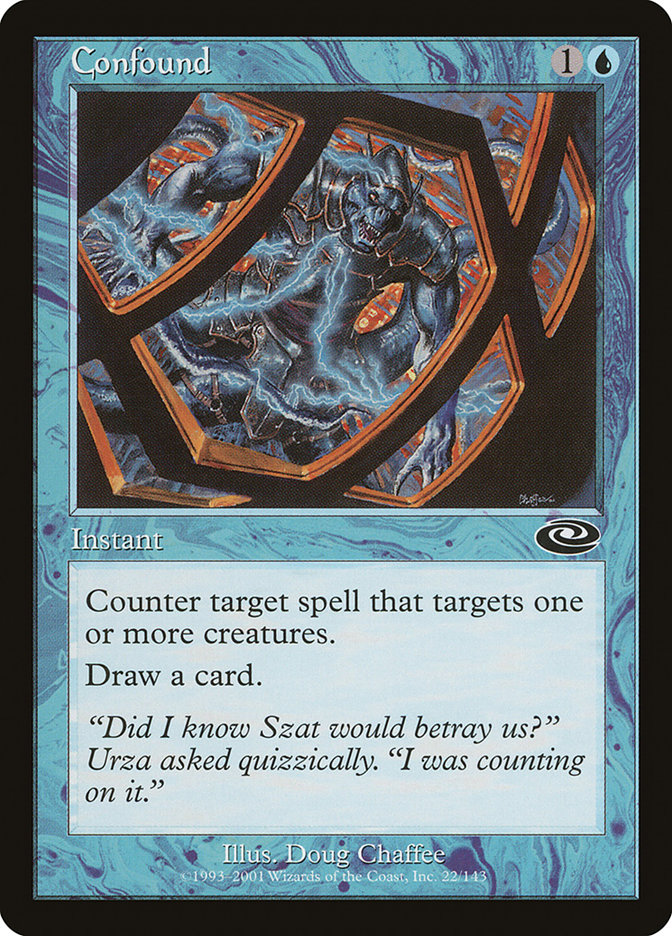
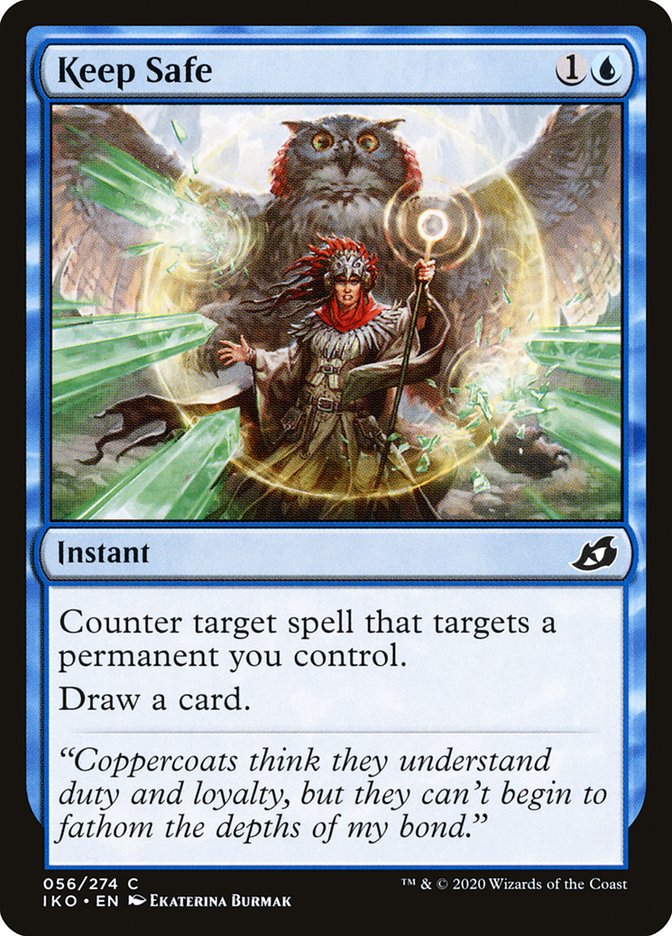
I wouldn’t be putting in my due diligence without calling attention to one glaring vulnerability – we lean heavily on having our commander on the battlefield in order for the deck to work. Making room in the list for a fair number of counterspells or protection spells is pretty mandatory, but luckily we really only need to focus on the ones that specifically protect our commander, since that really is our primary focus with the deck. Counterspells like Intervene, Confound, and Keep Safe fit the bill nicely. One of the benefits of only really needing to care about interacting with removal spells is that we can focus on a much more efficient suite of cards.


Similarly, there are two protection spells that deserve special mention. Shore Up grants our commander hexproof for a turn, and doubles as a way to untap Strobe Knight in a pinch. Mizzium Skin is a great way to either protect our commander, or get our entire team out of range of a Breath Weapon or Fiery Cannonade. Both cards provide a lot of great modality to our protection suite and are the cream of the crop in terms of explicit protection.
And we’re done.
So I think that those are my initial thoughts on the Xerex Strobe Knight. This is an awesome commander that is able to utilize some really cool cards in a super novel way. The cherry on top, for me, is that this deck is powerful. Nothing gets the juices flowing better than a mentally stimulating deck with intriguing play patterns that just straight up gets things done. It really just checks all the boxes, and is definitely one of my favorite new commanders in recent years. My current list is here.
 commander, dear reader