
Casual multiplayer Magic is fundamentally narrative. When the game itself becomes more collaborative, it starts to take on the form of a group storytelling exercise, with the course of the game shifting to fit a classic narrative structure. That is to say:
- Introduction
- Rising action
- Climax
- Falling action
- Resolution
Human beings are pretty narratively focused in general, and I think that our broad enjoyment of something like Commander derives very heavily from our ability to contextualize games as complete narrative experiences. When certain narrative elements are missing, games can feel incomplete and unfulfilling. Sure, we can always just shuffle up and play another game and whatnot, but I will absolutely die on the hill that we shouldn’t be sacrificing the quality of games as a concession to that ease of quantity.
One of my biggest level-up moments as a Commander player was starting to view my games through this lens, and it really helped me contextualize what I found valuable to be doing and not doing in a game of Commander. I’ve had really good results in terms of what I’m bringing to the table with card choices and decision making to that more narrative end, even though I may be the only one consciously approaching the game in that specific manner. Once I make it clear through my actions that I’m driving at a more socially collaborative approach to the game, my opponents will often buy into it and we’re off to the races. After all, we can only control our own actions, but with a little faith in our peers and confidence in the outcome I think positive gameplay experiences are more readily attainable.
So when I’m talking about a socially collaborative, narrative driven approach to Commander, I start with lining up the common phases of an average game of casual Commander with commonly understood narrative structure. It’s all very basic stuff, but seems largely underexplored in how it parallels the way we play a game like Commander. I envision them as follows.
Introduction
This is the phase of the game where everyone is drawing their opening seven, making their mulligan decisions, and setting up their board in the early turns. This is where we establish the players and what they’re trying to do, based on their early actions. Whether it’s getting some early pressure on the board, ramping, or setting up future synergy pieces, we get a glimpse into how each player perceives both their role and their opponents roles in the game. Who is interacting with who? Who is playing solitaire? Who is The Beatdown™? We are meeting our characters.
Rising action
Boards are developing. This is where we see commanders being cast and strategies starting to become more cohesive, with key pieces being deployed. We’re getting very real tension as players start to butt heads and jockey for position and they will tend to either commit harder to the role they’ve established for themselves or pivot based on interaction or board position. Always remember that players have arcs exactly like characters in a story, whether that’s taking on the mantle of villain and having to stave off other players as the archenemy, rising up from a slow start to overtake the game, or anything in between. This is the phase of the game where we see those arcs start to take shape.
Climax
The climax of a Commander game can range from an enormous single stack war or a series of huge attacks between players over a turn cycle or two. The key is that when these pivotal events have subsided, the back half of the game is adequately set up to play out. Our players will experience the most fully realized version of the role they have assumed thus far, crystallized into this narrow portion of the game. These events will not be the end of the game necessarily, but simply provide the context needed to resolve the conflicts we’ve been setting up throughout the game thus far.
Falling action
Things are starting to wind down. After the climactic sequences of the game, this is a series of events that will move the game to its ending. The remaining players may be low on resources, or scrapping it out with what’s left on the battlefield, or one or more players may have a plan in motion to win quickly and quietly in the aftermath of the big haymaker turns.
Resolution
The players reach the conclusion of their in-game arcs and someone emerges victorious. The former is more important than the latter.
WHAT DOES IT ALL MEAN
Obviously this won’t track perfectly to every game, but they are analogous enough to provide a decent blueprint. There are going to be games that move more rapidly through these stages than others, often deceptively so, but at the end of the day all of these stages should be present in some form. A lot of the more unsatisfying games out there tend to ignore this framework at least partially, if not fully. For example, when people have issues with cards or sequences that end the game abruptly and seemingly out of nowhere, I think it can be traced back to skirting the narrative course of the game and not allowing that story, in which the players have invested, to fully unfold. When we think about those stories (books, film, television, etc.) that we find unsatisfying, many times it is because they are underdeveloped either through characters or plot. Games of Commander follow this paradigm as well.
The low hanging fruit
Combat is a really important part of this equation – it is a part of the game that caters tremendously to the development of the player roles and relationships. When we think of interaction, our minds immediately go to counterspells and removal; cards interacting with cards. The combat step facilitates a completely separate meta-interaction; players interacting with players. It’s important to attack deliberately, not randomly, so we can make those connections with our opponents in a meaningful way and establish and develop those relationships.
Additionally, I think that combat is often misunderstood as being a purely mechanical aspect of the game rather than a narrative one. The prevailing mindset around combat seems to be one of caution. No one wants to commit to a combat that could leave them open to an attack from another player, and this often results in no one attacking anyone unless the target is chosen randomly, so as to cower behind the whims of fate. It is almost entirely a tactical decision that is based in self-preservation rather than proactive narrativization, which is how I think combat is more properly utilized in Commander games.
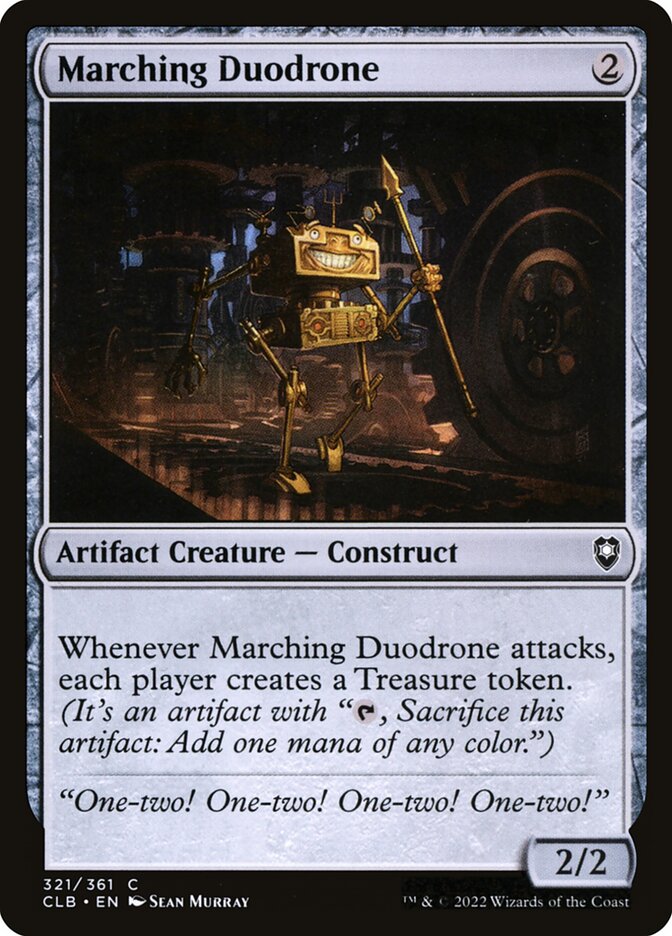
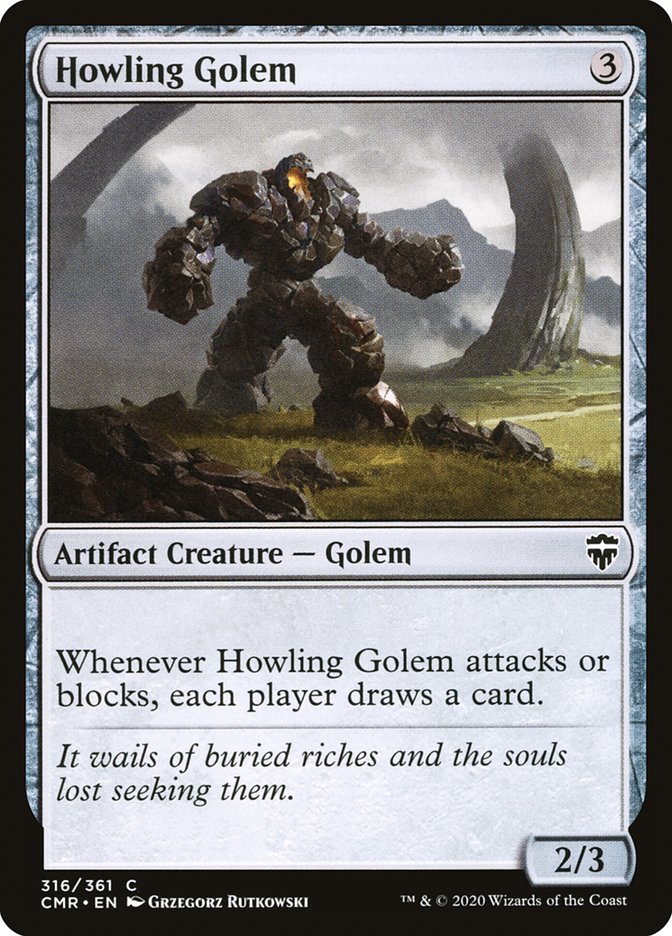
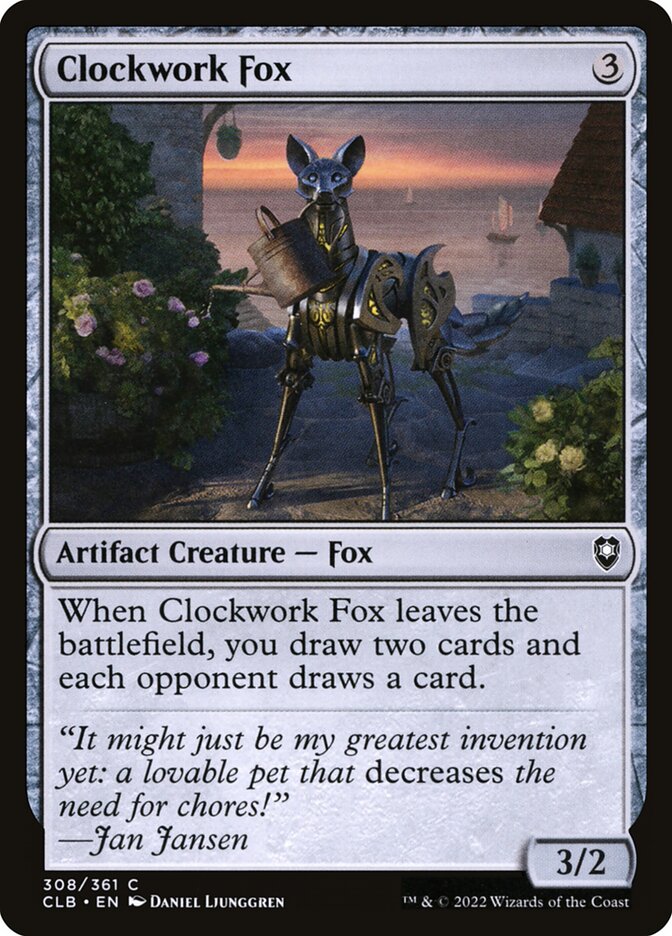
A collaborative storytelling framework also recontextualizes symmetrical resource generation. Giving resources to our opponents on a smaller scale helps them achieve a more realized version of their role in the game and keeps the action moving forward. In Pauper Commander, Marching Duodrone and Howling Golem are colorless creatures that embody this dynamic perfectly, especially by the fact that they can go in any deck. Whether it’s cards-in-hand, lands, tokens or whatever, these are things that can be leveraged into advancing the story of the game.
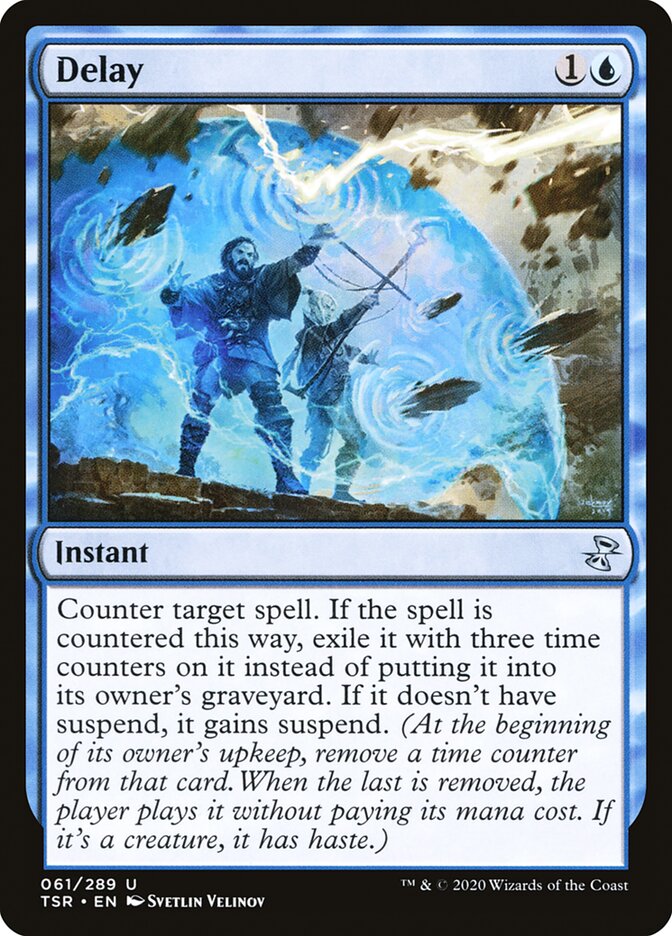
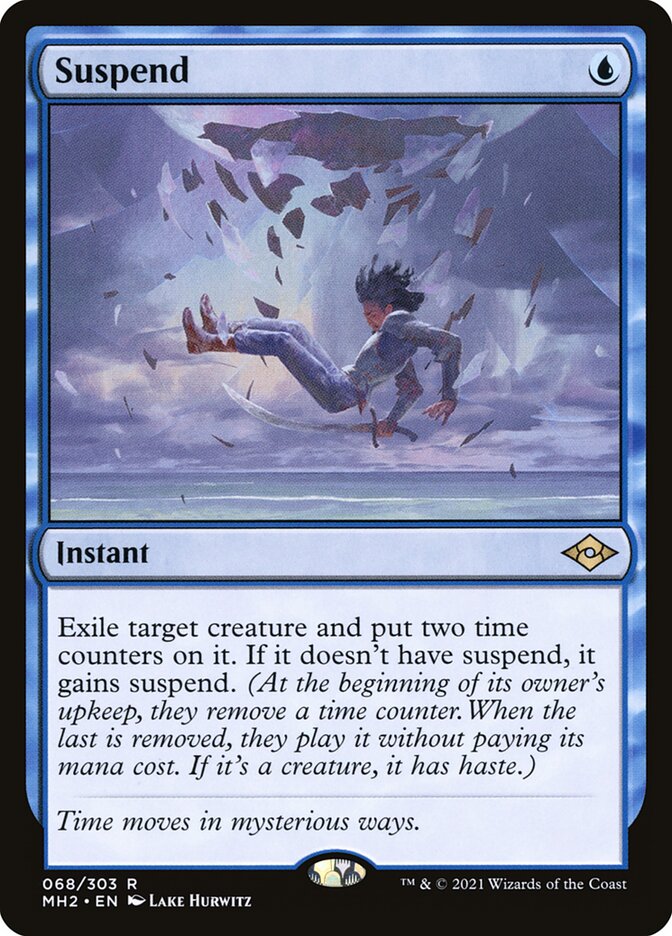

I also really like interactive spells that generate temporary windows to incentivize action. In Commander, cards like Suspend and Delay, even Soul Partition, are great cards that allow players to create tension by virtue of anticipation. The table can see that a problematic permanent or spell will soon return or resolve and either act in its absence or prepare for arrival. These are dynamic decisions that only enrich the overall narrative.
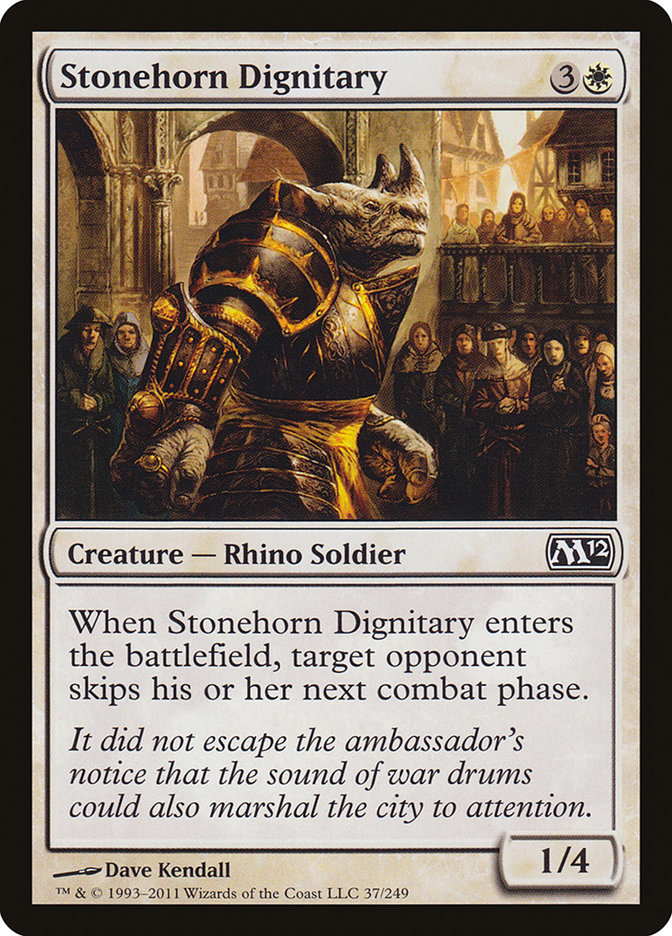
While applying a narrative framework to Commander games positively recontextualizes a lot of different cards, effects, and actions, it does so negatively with others. For example, static or persistent effects that restrict the ability of players to engage with the game are probably not optimal for achieving a complete narrative experience in most games. Stonehorn Dignitary, for example, is a card that’s pretty interesting as a one-off effect and creates some really great tension in-game, in small doses. However, if you build your deck to repeatedly flicker it in perpetuity to lock your opponents out of combat, you’re cutting off access to a compelling storytelling device. Importantly, these sorts of things are not inherently bad, but they’re best utilized when the proper expectations are set before the game begins so players can purpose them appropriately within the narrative.
At the end of the day, congruity within the game’s overarching narrative is what matters – it all needs to fit together and make sense in context. As long as everyone is on the same page with the story being told, there really isn’t a wrong way to play it out.
 commander, dear reader