
For as long as there have been Magic: the Gathering decks, there have been those built around Elves. Showing up and featured in formats across the history of the game, these little pointy-eared rascals have certainly made a name for themselves as a highly synergistic group of creatures bundled with highly powerful payoffs. The Pauper Commander ecosystem is really no different. I think that Elves are underexplored in the Pauper Commander world, and there are so many great Elf commanders available that each add a unique flavor, depending on what you want to be doing.
For me, what I want to be doing is going fast. That’s what I always found so compelling about Elves as a theme – the ability to put the pedal to the metal and just deploy stuff, hair blowing in the wind. Elves facilitate this experience in a unique way for Pauper Commander, since the format is devoid of any real fast mana the way that we understand it in Commander – there aren’t any Sol Rings, Jeweled Lotuses, Moxen, etc. When it comes to generating the fastest mana in town, I think Elves stand alone; among the bevy of Elf commanders out there, there is none better suited to playing at the speed of light than Heritage Druid.
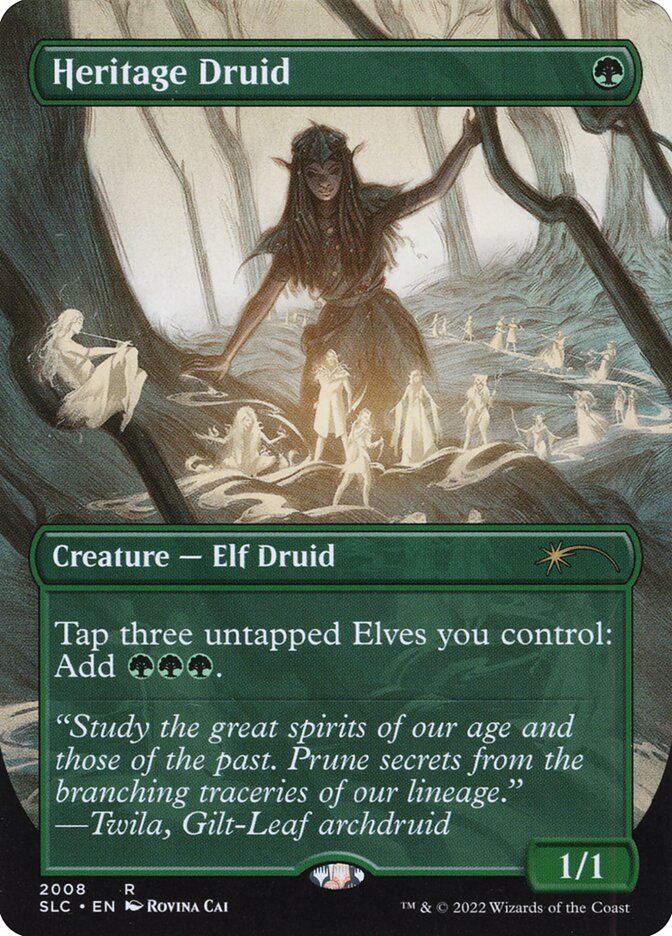
My iteration of a Heritage Druid Pauper Commander deck is a linear aggressive deck built to maximize early game tempo by deploying a high volume of creatures before our opponents can reasonably interact. It is unique in its ability to capitalize on both high synergy and high redundancy, ultimately looking to win the game through combat damage. With linear aggressive strategies, our average power level on a card-for-card basis can trend a bit lower than average simply because we want to engineer the deck towards specific and consistent play patterns. That in mind, I’m very much of the opinion that we either need to be generating a lot of velocity or card advantage out of the command zone in order to compensate – this deck trends towards the former.
The most important aspect of Heritage Druid as a commander is its ability to consistently produce surges in mana production, oftentimes letting us end our second turn with six mana worth of permanents on the battlefield. Then, we can leverage that head start into increasing pressure to the board over the following turns. Unlike other aggressive creature-based strategies, Heritage Druid focuses highly on synergistic pieces, but is able to circumvent many associated pitfalls with a heavy focus on redundancy. Consider the following play pattern:
Turn one:
- Play an untapped land
- Cast any one-mana-value Elf
Turn two:
- Play an untapped land
- Cast any one-mana-value Elf
- Cast Heritage Druid
This sequence gives us access to a burst of three additional mana on turn two, while already having committed three mana worth of permanents to the board. It’s important to note here that in order to execute this, we simply need two one-mana-value elves and two lands. This is an easy threshold to reach, and is something that we can build around to maximize consistency.
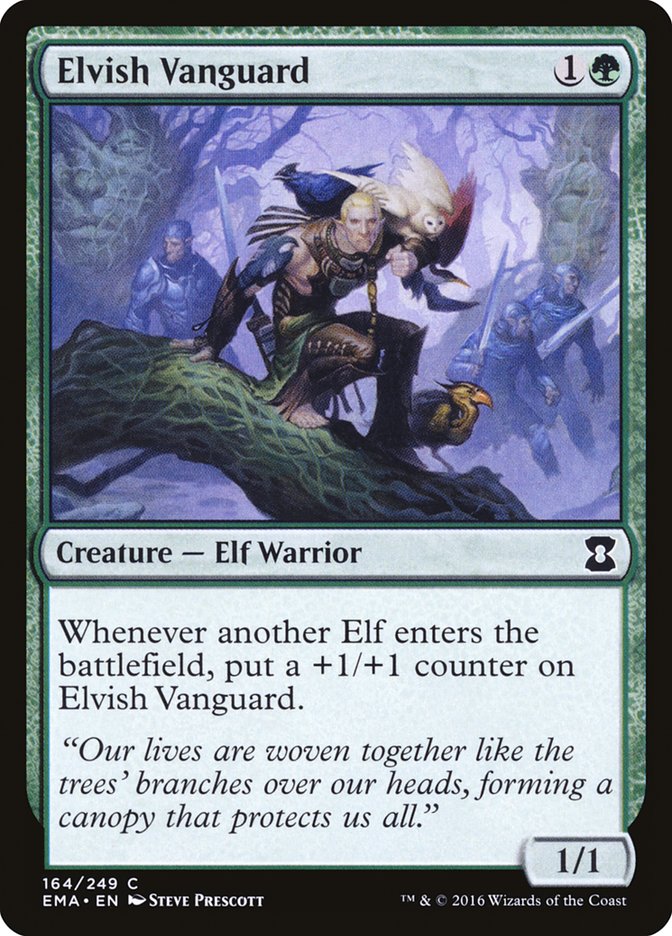
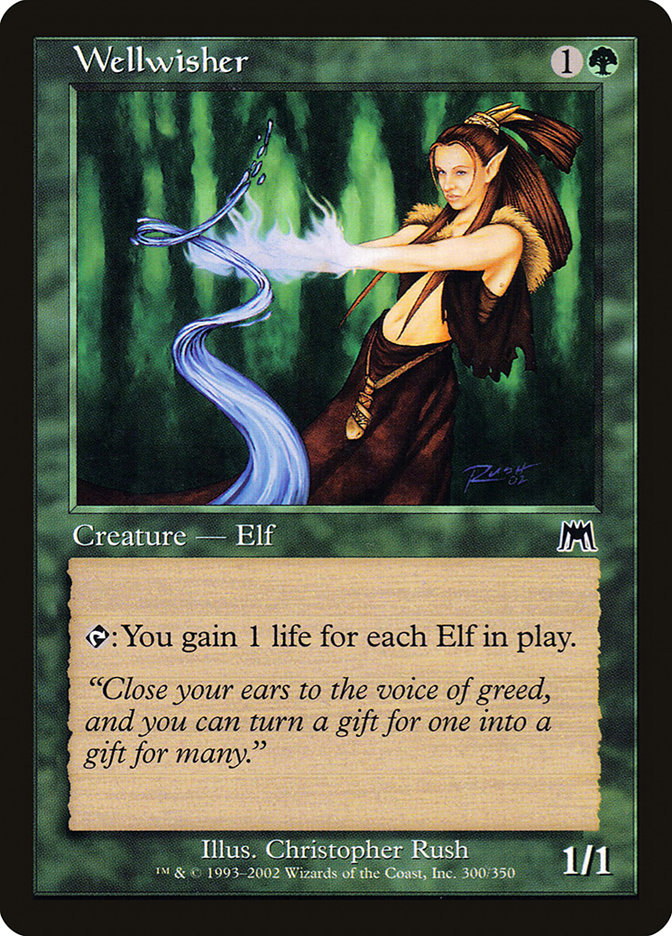
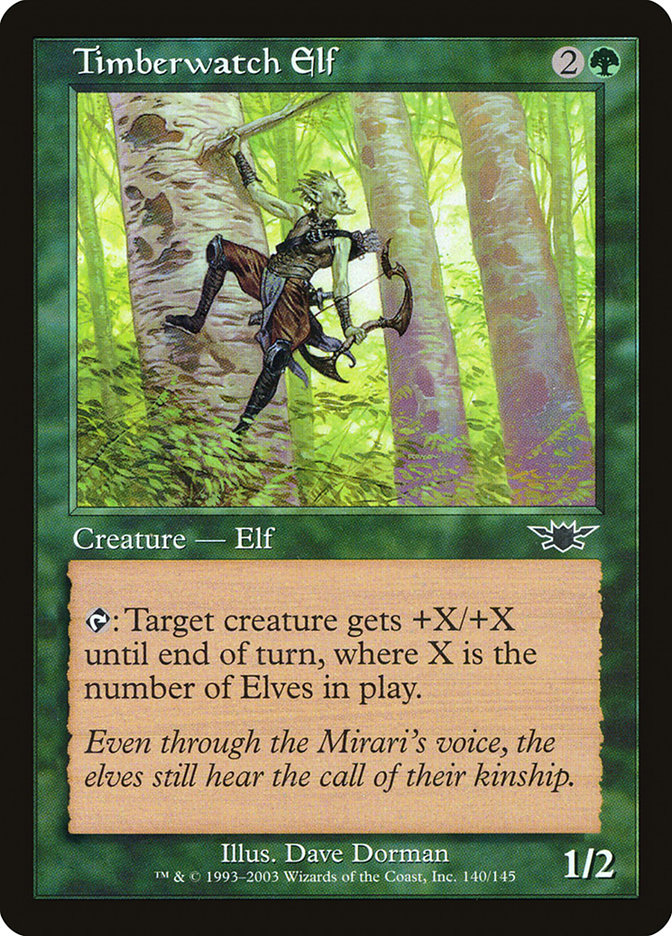
That aside, the overall objective is to generate a density of Elves on the battlefield. The most powerful payoffs we have access to key off the amount of Elves we either have under our control or that we can deploy from our hand (Timberwatch Elf, Priest of Titania, Wellwisher, Elvish Vanguard, Ivy Lane Denizen, etc), and we can further exploit this by utilizing pump spells that scale on that same vector. Cards like Might of the Masses, Wirewood Pride, or even Aspect of Hydra have the ability to create large blowouts, since it’s very easy to assemble a critical mass of Elves to fuel them. These are the cards that we will often lean on to steal games.
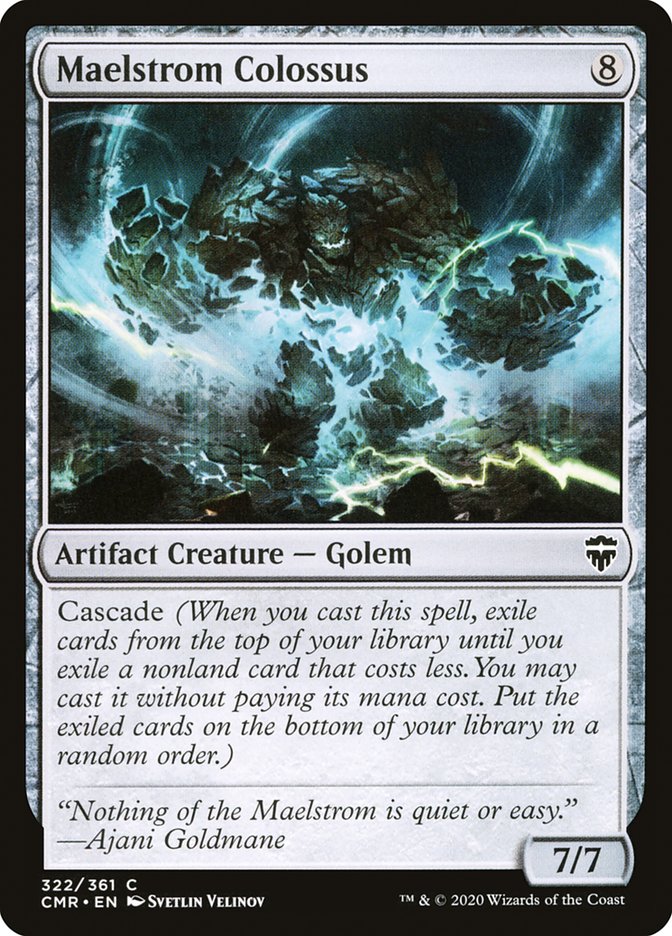
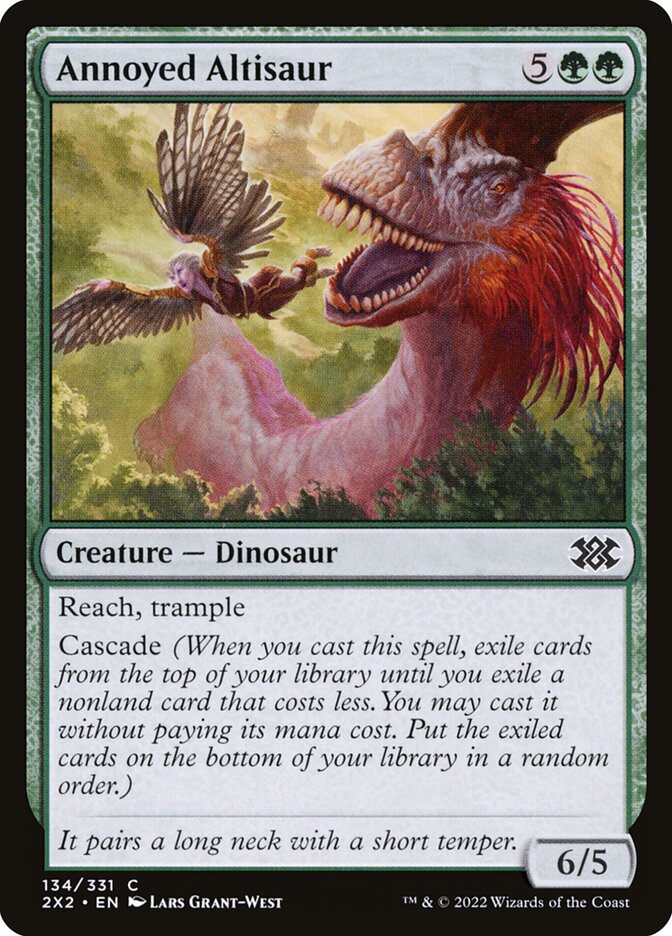

Outside of the Elf-specific synergies, we can use our mana advantage to turbo out huge creatures way ahead of schedule and get the pain train rolling. It isn’t uncommon to be able to cast a turn four Ulamog’s Crusher, Maelstrom Colossus, or Annoyed Altisaur and really set the pace on the game. This is a deck all about asking the tough questions and not wasting our time trying to come up with answers.
Combos and synergies
Though we are trying to win primarily through combat, there is one explicit combo line in the deck that serves primarily as a “Plan B” win condition:

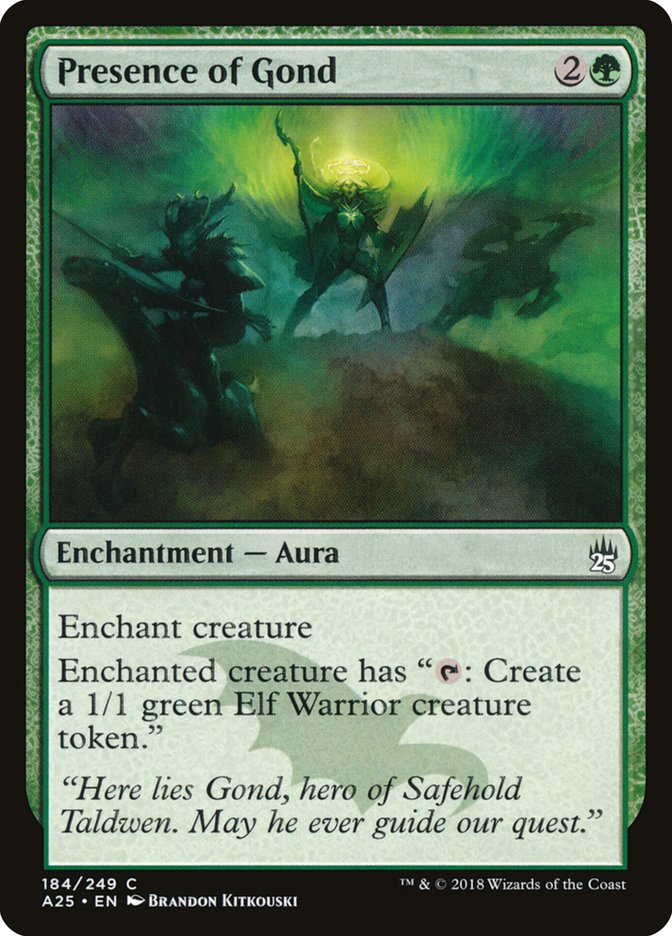
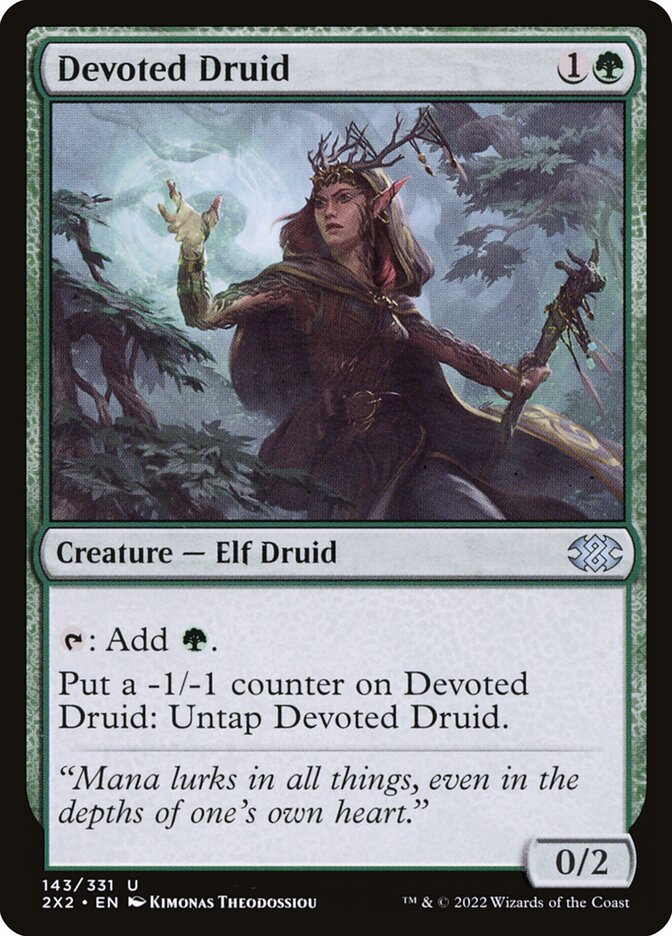
- Devoted Druid + Ivy Lane Denizen + Presence of Gond allows for the creation of infinite 1/1 green Elf Warrior creature tokens.
- Casting Presence of Gond on your Devoted Druid allows it to tap and generate a token. That token triggers Ivy Lane Denizen, placing a +1/+1 counter on Devoted Druid. Then, we can remove that counter to untap Devoted Druid and repeat that sequence infinitely. The pieces are functional individually in terms of what the deck is trying to achieve and the combo itself carries such a low opportunity cost to include.
While there are no other combos in the deck, there are many smaller noteworthy synergies. For example:
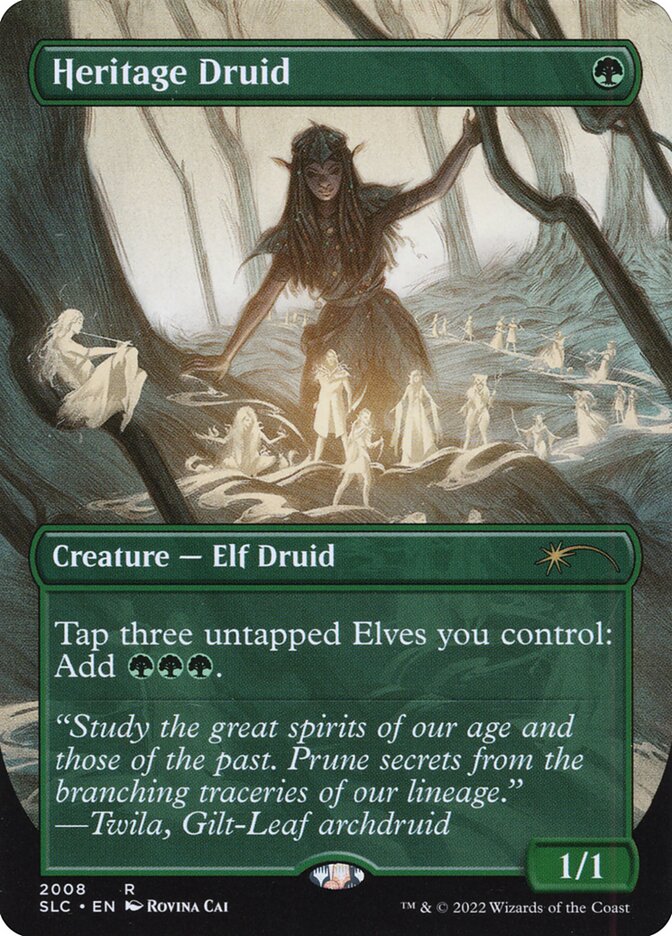
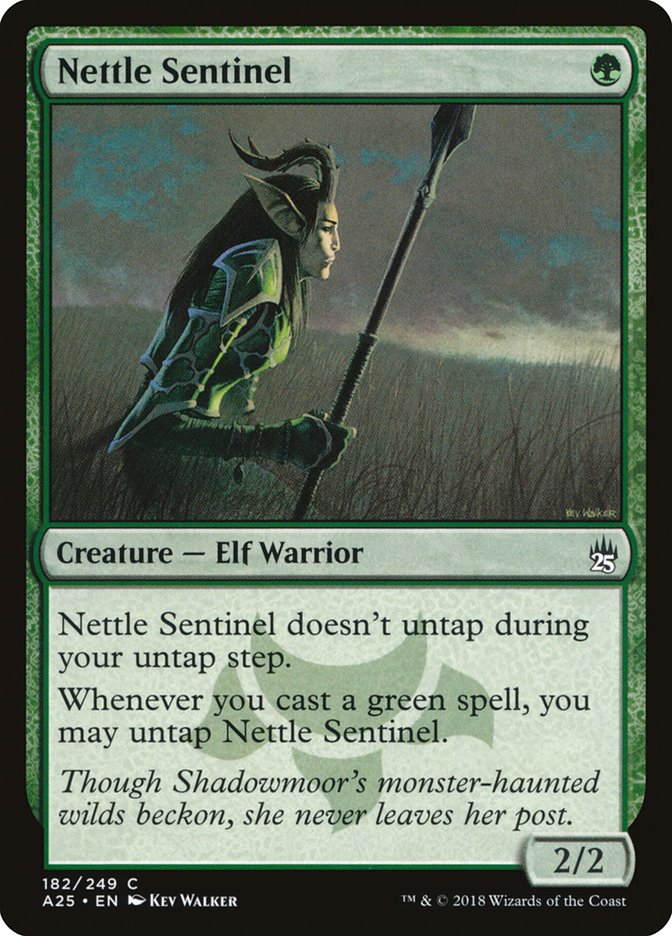
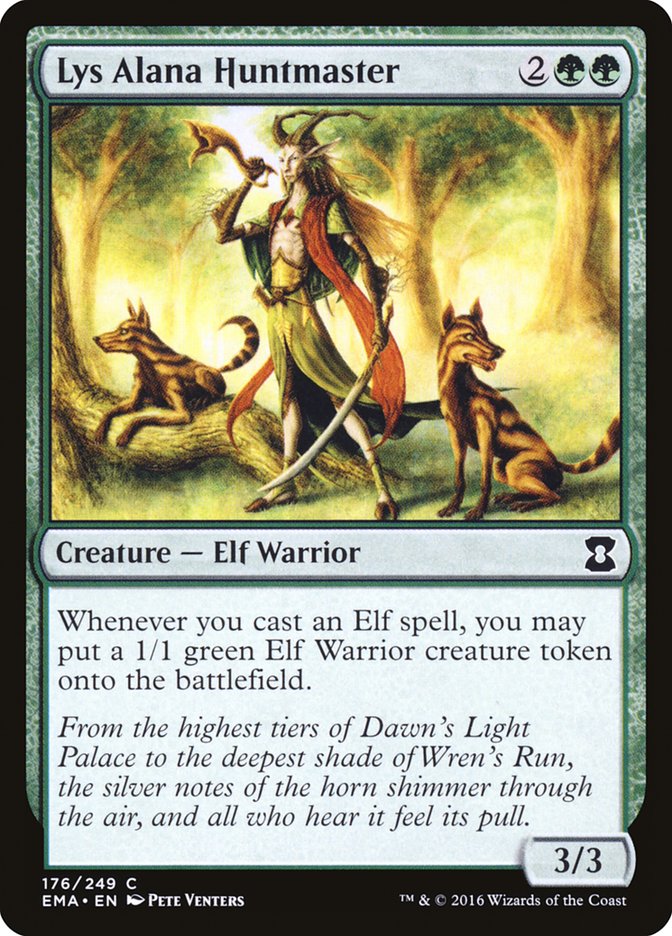
- Between Lys Alana Huntmaster, Nettle Sentinel, and Heritage Druid, any Elf we cast will be able to produce a Heritage Druid activation.
- Casting the Elf in question will generate a token through the Huntmaster and untap Nettle Sentinel. We can then tap Nettle Sentinel, the Elf Warrior token, and the Elf we just cast to activate Heritage Druid and produce three additional green mana.
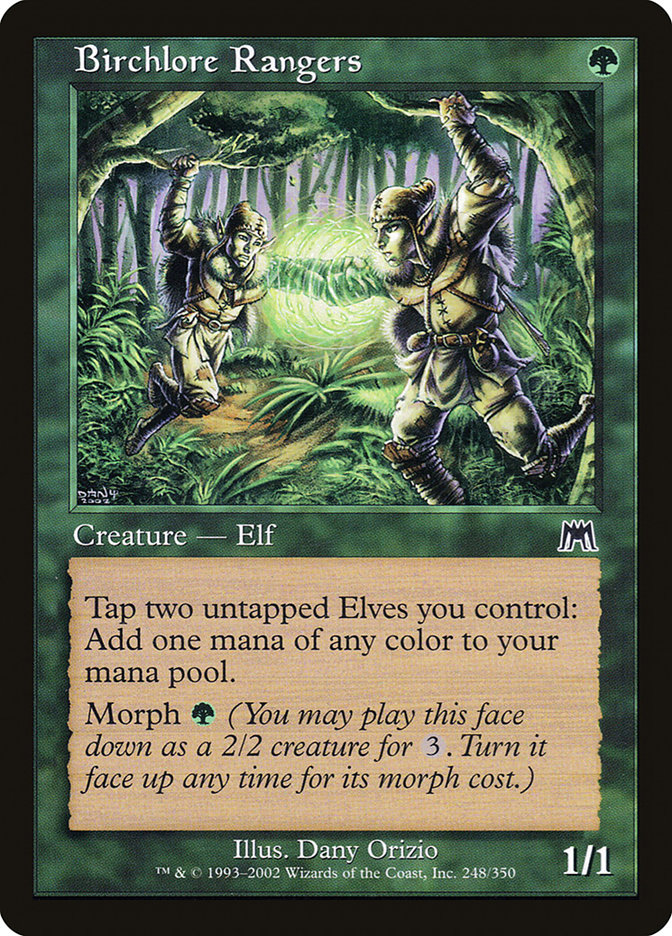

- We can use Nettle Sentinel in conjunction with Birchlore Rangers to cast our one-mana-value Elves in perpetuity.
- Once we activate Birchlore Rangers’ ability with Nettle Sentinel for one green mana, we can cast a one-mana-value Elf. That cast will untap Nettle Sentinel for another Brichlore Rangers activation, tapping itself and the Elf we just cast. We can repeat this for as many one-mana-value Elves we have access to in our hand.
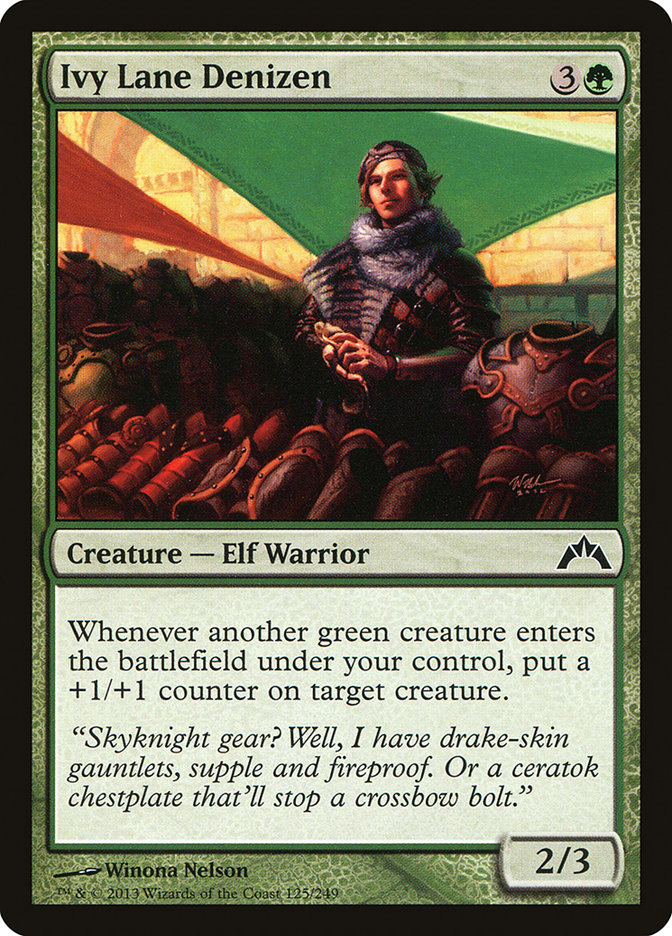
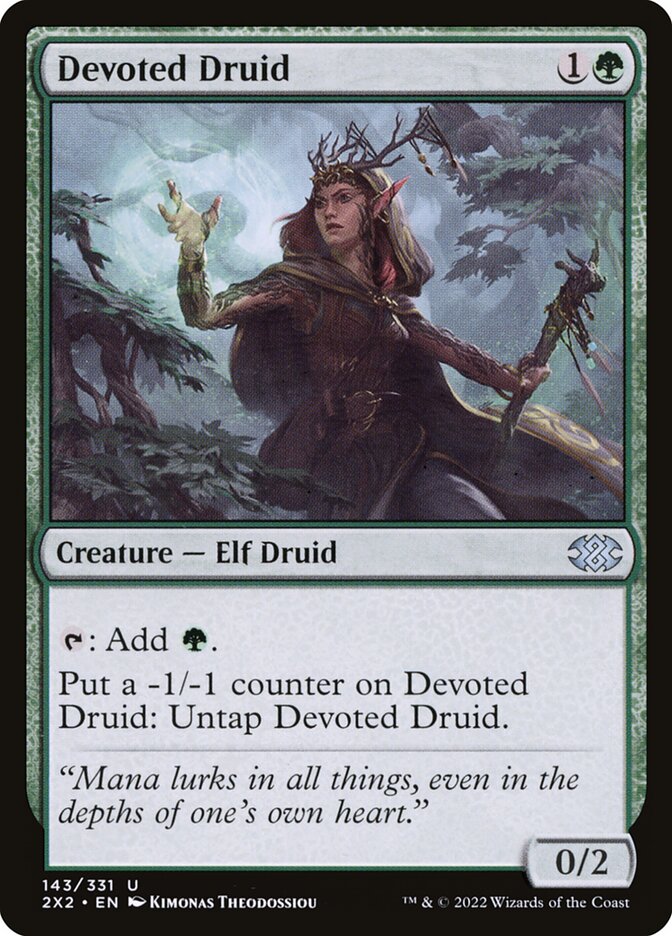
- With Devoted Druid and Ivy Lane Denizen, any Elf (or green creature, for that matter) that enters the battlefield will allow us to activate Devoted Druid’s untap ability.
- When Ivy Lane Denizen triggers, we can put the +1/+1 counter on Devoted Druid and subsequently remove it to pay for the untap.
Meta Considerations
The elephant in the room here is the presence of sweepers in the format. Heritage Druid is unique in that it allows us the freedom of a highly adaptable creature base that we can tailor to fit a desired level of resilience
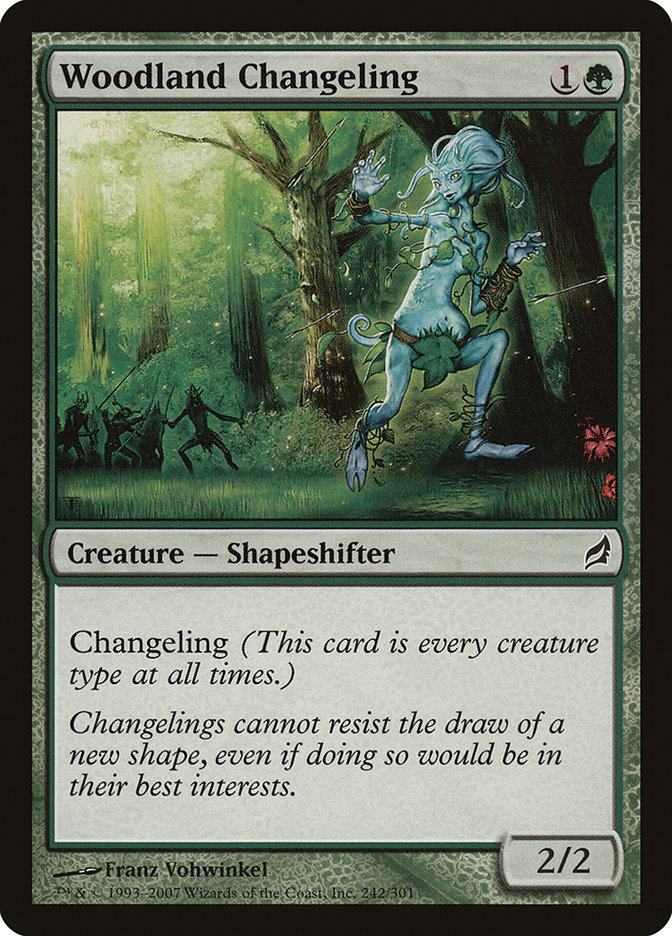
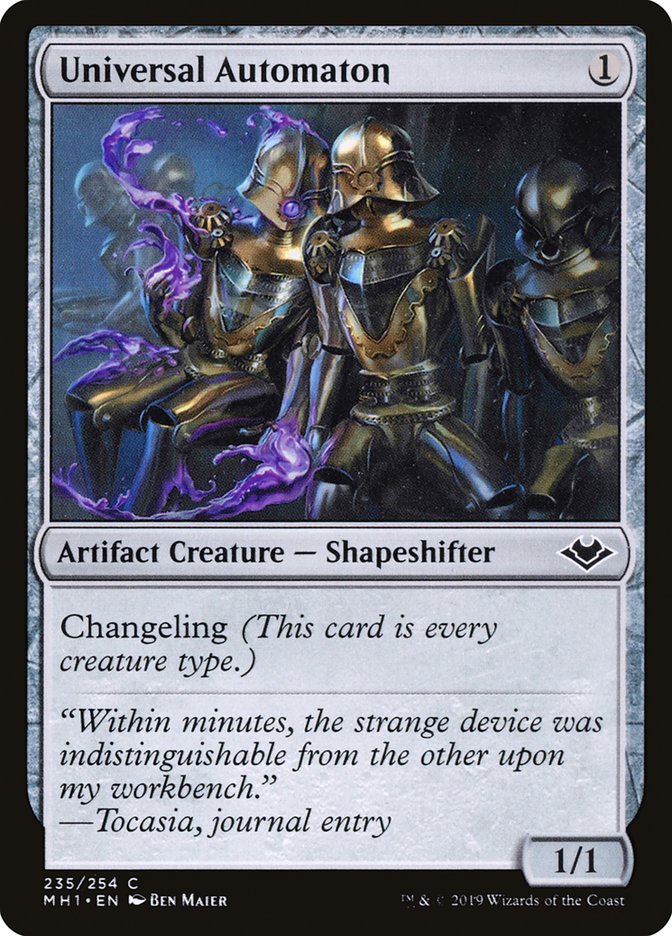
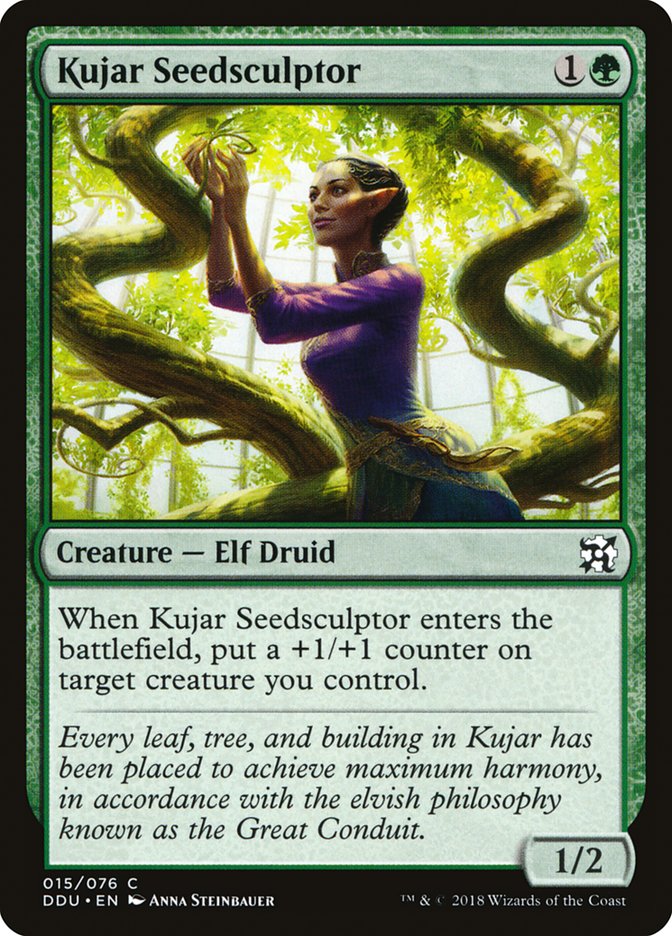
For example, in metagames that are heavier on cards like Fiery Cannonade or Breath Weapon, which care specifically about creature type, we can pivot into changelings like Woodland Changeling and Universal Automaton. While not particularly impressive, they do provide some insulation against those effects by counting as both Pirates and Dragons to dodge them. Additionally, we can consider cards in the vein of Kujar Seedsculptor that add a +1/+1 counter to a creature when they enter the battlefield. It isn’t particularly difficult to get our important creatures out of sweeper range with these cards. The floor on them isn’t too bad either – Seedsculptor, with its counter placed on itself, will be a perfectly serviceable three-toughness creature, out of sweeper range. Elvish Warrior is a surprisingly effective template here as a resilient creature that can attack pretty well on its own.
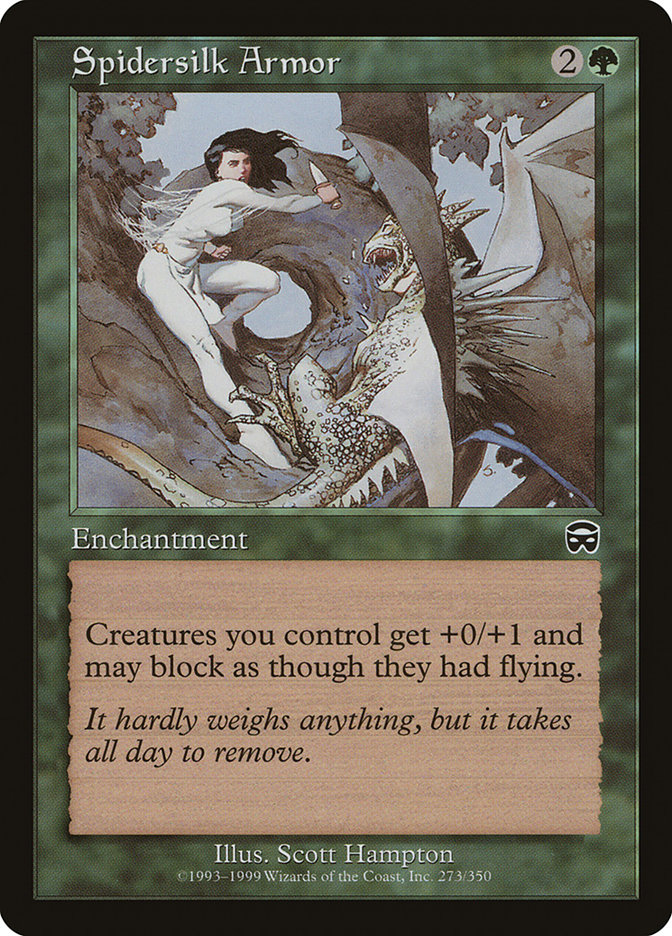

There are also other cards that already slot into our game plan and have applications here. Master Chef, Spidersilk Armor, and Ivy Lane Denizen are cards that we are already running that also protect our board in a less intrusive way. The long and the short of it is that there are a number of valves we can adjust at relatively little cost to insulate against sweepers.
Beyond that, aggressive lines can also get a little muddy in more creature-heavy environments. Pound for pound, most of our creatures are not going to be as impactful to the board, since we are structuring our creature base to hit specific tempo markers rather than overall card quality. Again here, though, those markers do allow us some flexibility. If we need to consistently assume a more passive or defensive position as we develop our board, higher-toughness Elves may be more desirable. Ultimately, the flashpoint combat steps are going to be dictated largely by our access to pump effects, so we get to be a little modal with something like Druid of the Cowl, providing a higher toughness in the early game while still letting us push damage later by contributing to the metrics on which we measure those desired pump effects.
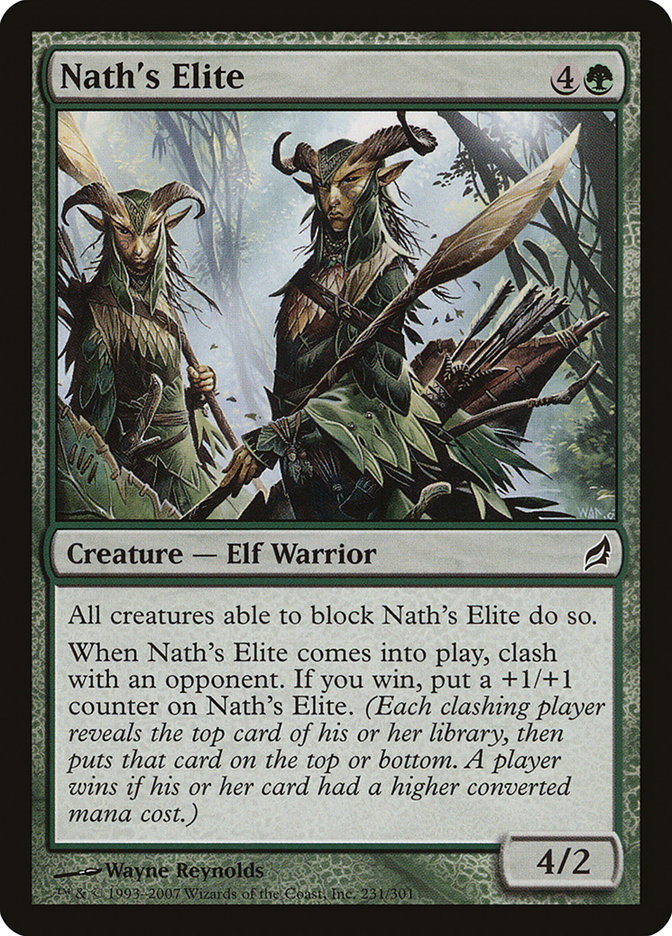
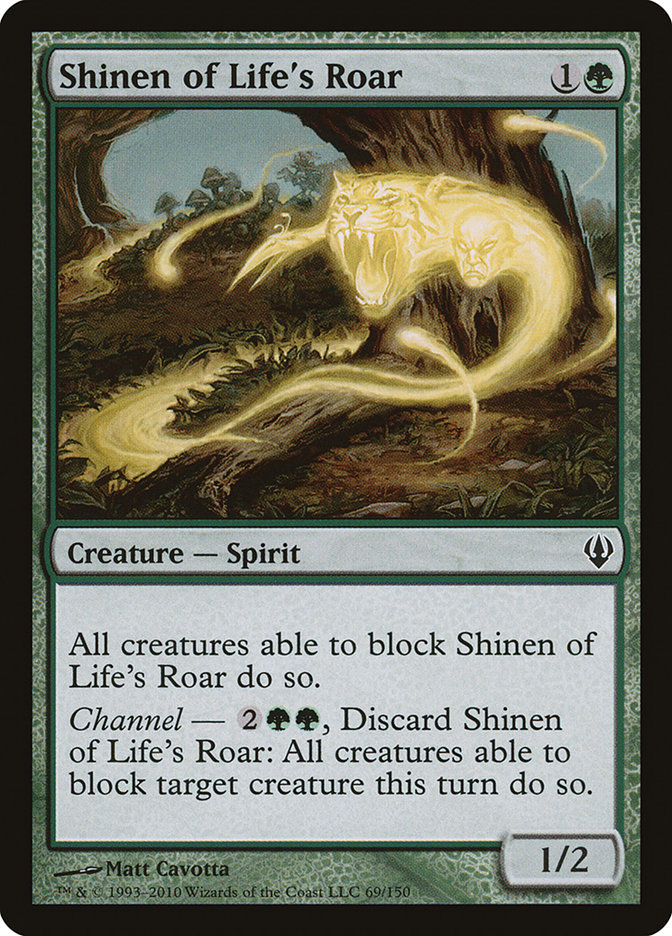
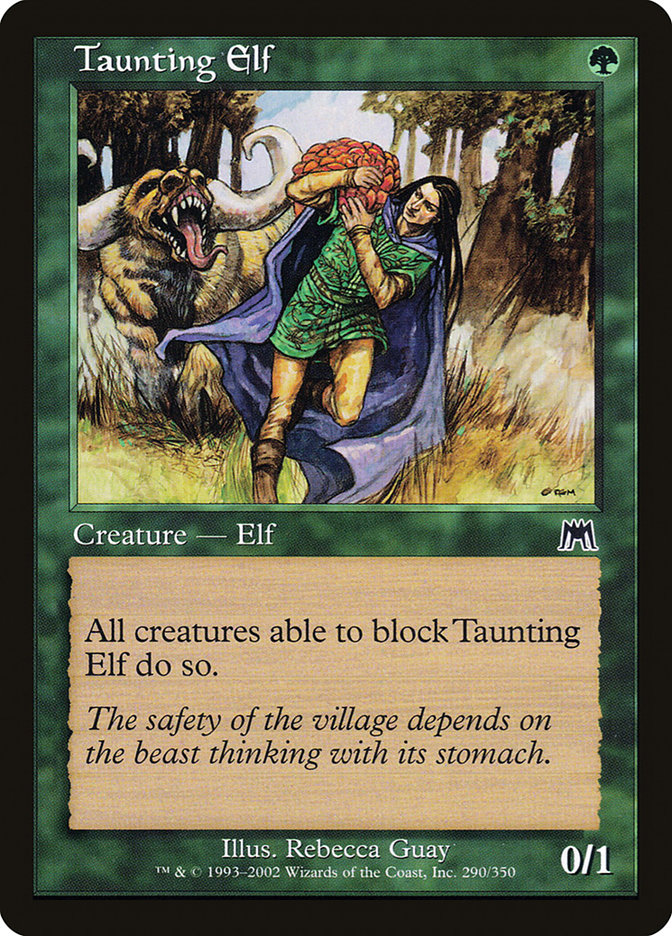
In the other direction, we can also look to cards like Taunting Elf and its analogs to proactively bust crowded board states. Again, whether we want to be building to pivot defensively or aggressively for an expected metagame will dictate what suites of creatures we want to highlight.
One of the most difficult aspects of understanding a deck like this on paper is this interchangeability between pieces, and also what makes it tremendously difficult to optimize. Ultimately, this deck is highly academic, and this list is meant to represent a strong starting point for necessary metagame customization.
Winning through combat
We are going to be winning the game through combat. Thus, we need to be cognizant of how we utilize our on-board resources not only to maximize the damage that we produce outside of our flashpoint combat steps (those where have access to lure effects and pump spells), but also simultaneously maximize the amount of creatures on the battlefield to maintain our creature density. This frames a pretty delicate balancing act that can be difficult to navigate. Knowing when to attack, and with what, is not always intuitive.
First, it’s imperative to have an expectation for how our first few turns of the game will play out. We want to be rapidly developing our board to get ahead of the table, and this often requires us to be aggressively activating Heritage Druid, limiting our ability to attack. Since we need three Elves to activate Heritage Druid, if we have an incongruent number available, we need to prioritize our best attackers to remain untapped and accessible for combat. Oftentimes, this will result in some chip damage over the early turns before our opponents can set up proper defenses. Every point is important.
Once the battlefield becomes a little more populated, we can easily find ourselves in a situation where we don’t have many good attacks available to us, especially if we don’t have a big creature to ramp into. We do have tools to mitigate these stalemates, but it isn’t guaranteed that we’ll have them exactly when we need them. In these situations, it is perfectly fine to pass through combat to preserve our creature count and wait until we can get either a lure effect or pump spell to break through an opponent’s defenses. Sitting back and developing our board is perfectly fine in the absence of hard action if we don’t have a clear advantage or line of aggression.
Importantly, something that gets frequently ignored in these sorts of conversations is the fact that our opponents will most likely be taking incidental damage from various things as the game progresses. The common refrain is that an aggressive Pauper Commander deck will need to deal 90 damage (30 to each opponent) to win the game. Maury Povich has determined that this is a lie. Life totals will naturally trend downward even if we aren’t applying consistent pressure. Remember, there are three other players trying to reduce life totals to zero as well – we can look for opportunities to exploit this dynamic.
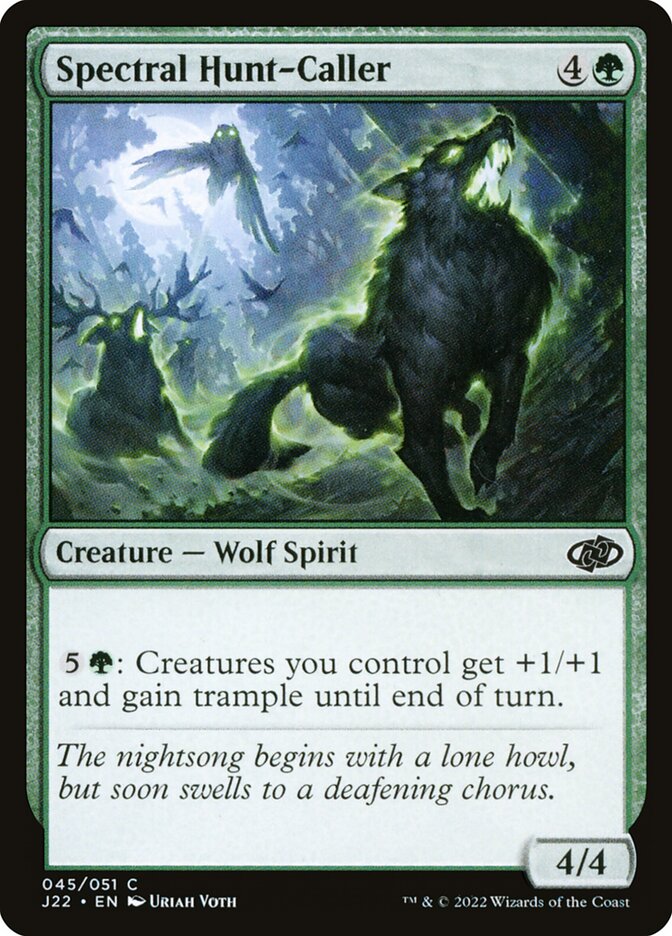
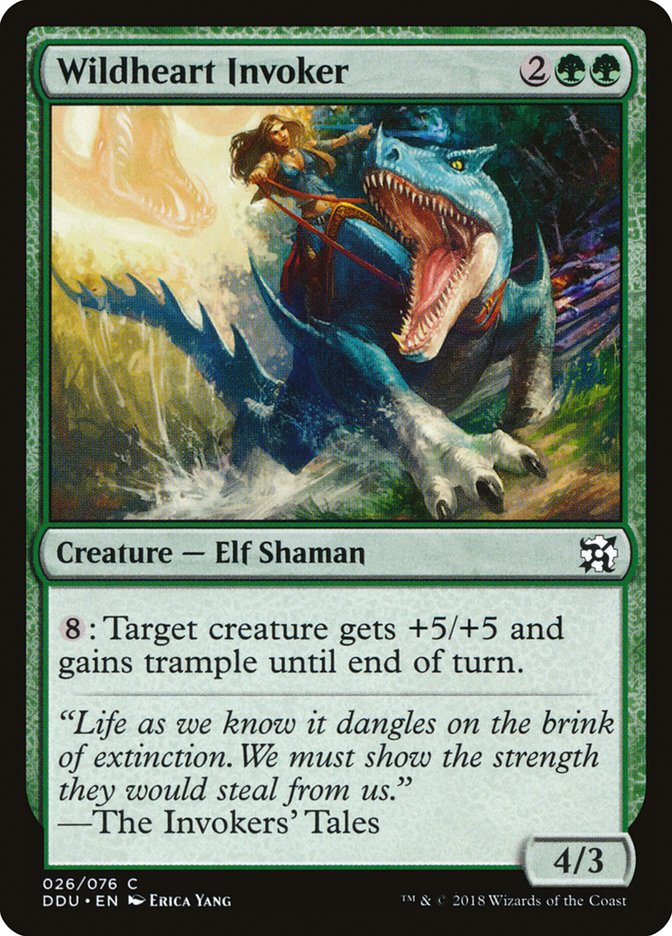
Once we hit the mid-late game, we want to be looking for ways to leverage our (hopefully!) density of creatures into some knockout punches and seal things up. We have some creatures like Wildheart Invoker and Spectral Hunt-Caller to sink mana into, but we need to keep the costs in mind – how many Heritage Druid activations will we need to enable them? This is vital calculus, since most of the time this will involve removing potential attackers from active duty and impact how we need to allocate resources.
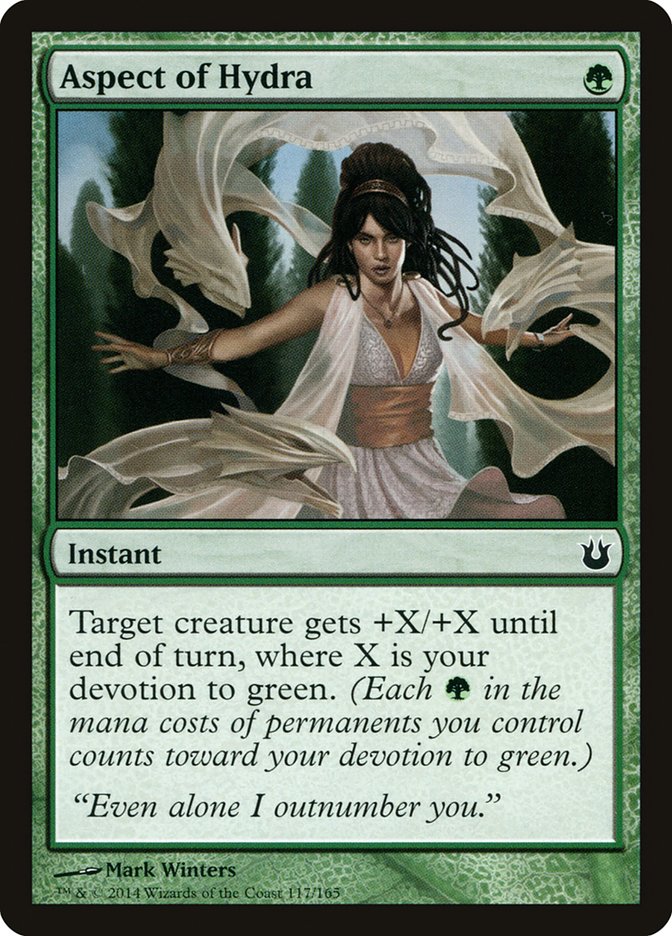
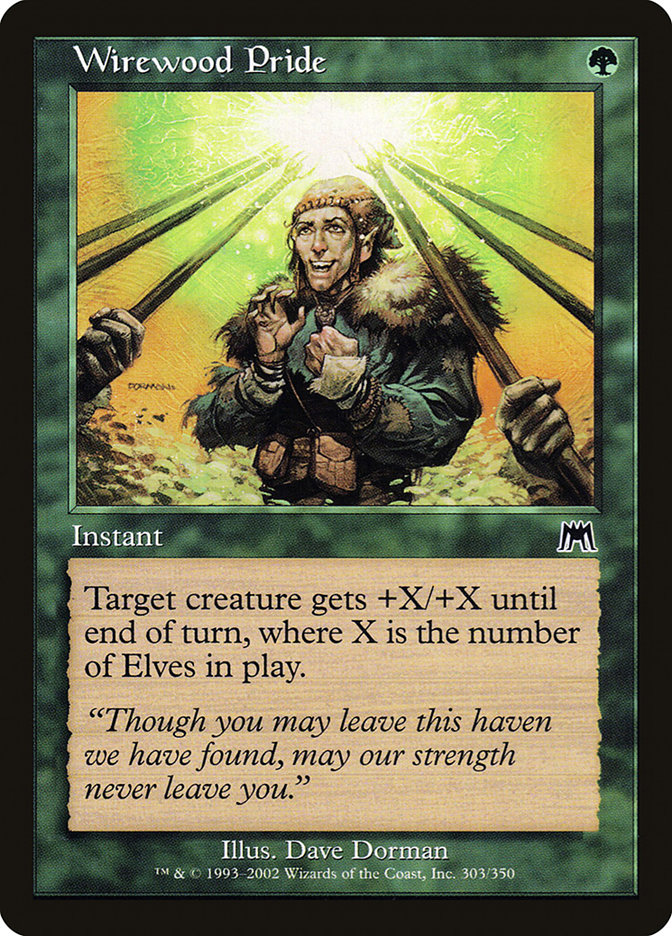
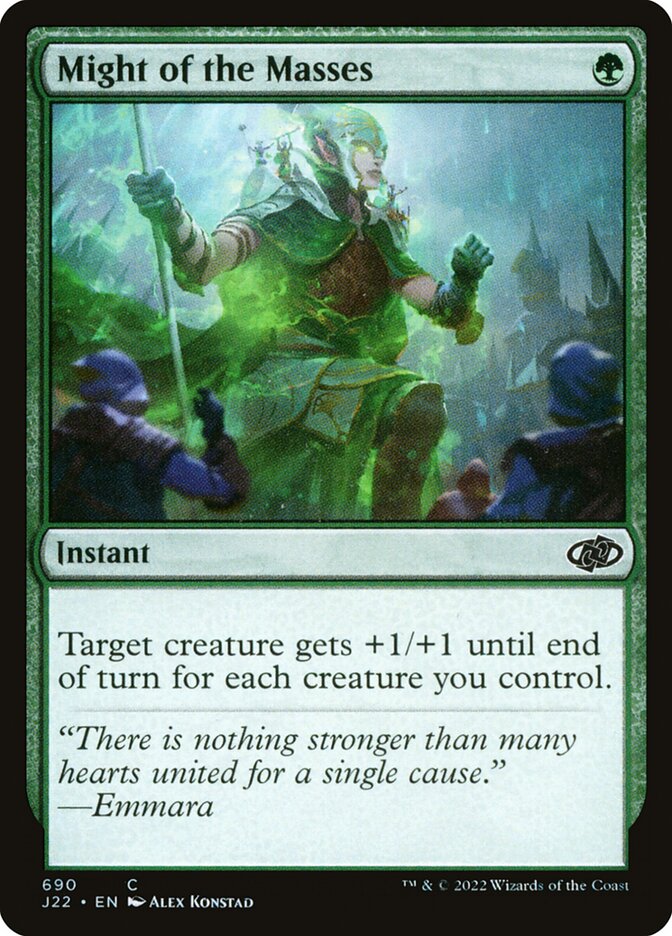
The objective in these late-stage combats is to go over the top of our opponent as a function of going wide. That is to say, we present too many attackers for our opponent to effectively block, and then push through massive damage with our unblocked creatures and pump effects. It is not uncommon to add 10-15 damage to the board with a Might of the Masses or Wirewood Pride, which is a pretty absurd rate. Obviously, these are fantastic tools for knocking players out of the game, and ones that we will regularly rely on. However, using one early and simply demonstrating that we have access to these explosive effects can incentivize a lot of opponents to take a more conservative stance in the game in an attempt to play around them. That knowledge will oftentimes be enough to make folks think twice about how they attack and block, and this is something that we can exploit.
All said and done, this is a very nuanced deck to wield effectively in combat but pays off with a very high ceiling on what it’s capable of. Embracing that weird tension between tempering aggression and riding the lightning is one of my favorite parts of piloting this deck. It’s truly one of the most unique experiences I’ve had playing Pauper Commander.
 commander, dear reader