
So I want to return to flicker decks. Whereas my previous foray into my favorite archetype centered on how to go about conceptualizing the sort of flicker deck we want to build and guiding that process, I really want to focus more now on how to integrate card choices into the way we pilot the deck, and how we can make the games a little less tedious. Not to bury the lead here, but I think that flicker decks have an inherent problem where it is very easy to monopolize game time while not meaningfully advancing the state of the game. I love to spin my wheels as much as the next player, but it’s really easy to bring the momentum of a game to a functional halt as we force the other players to watch us grind out value and clutter the stack.
There are a couple traps that I see people fall into when building and piloting flicker decks, and I think that they go a long way to creating the stigma that the archetype currently faces. It’s really easy to approach it from what I consider to be a level-zero perspective of using creatures that create card advantage alongside a critical mass of ways to repeatedly generate that advantage, most often culminating in some kind of loop or specific win condition to end the game. They generally assume a more controlling stance with a focus on slowing down the game while continuing to grind that incremental advantage towards that end goal. This, I think, is the fundamental flaw that tends to go underexplored. Since the card advantage gained tends to be so incremental, and in service of specific win conditions, they are simply incentivized to slow everything down and buy time, rather than creating opportunities to engage with the table. Don’t take this to mean that these approaches aren’t powerful – they certainly can be. I just don’t think it’s necessarily conducive to a positive experience with an untrusted playgroup.
Obviously, in a casual, untrusted setting, this approach may not be well received – the other three players are looking to do their thing just as much as we are. That in mind, I think it’s worth setting aside this more tedious approach to take a look at how we can recontextualize the way we approach card advantage, our role in the game, and how we interact with the other players. Maintaining a healthy pace of play and level of engagement should be the ultimate objective, and I don’t think it’s particularly difficult to achieve if we color a little outside the lines of conventional wisdom.
Bee-ee agressive
The combat step is one of the most important narrative tools that we have access to in Commander, and also what I find to be the one of the most underutilized. A meaningful combat step is a great pace-setting and storytelling tool, but flicker decks introduce a tension to where it can be difficult to take adequate advantage. You see, dear reader, many of the creatures that make for great traditional flicker targets are actually pretty mopey in combat – they really just function best as stationary pieces that wait patiently to be taken advantage of. That being said, there are ways to generate value that don’t involve simply flickering your Mulldrifter or Wall of Omens. While drawing cards is certainly the most transparent way to demonstrate the, well, card advantage that we want to accrue, there are a number of more aggressively slanted creatures that can provide more virtual card advantage while also serving as a relevant player in combat and keeping pressure on our opponents and the game moving along.
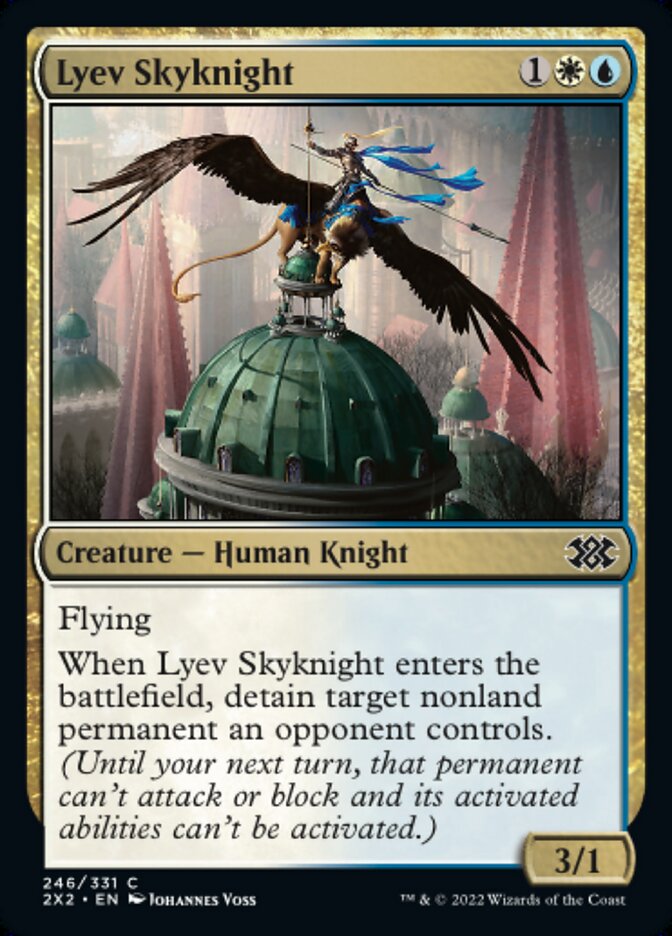
Lyev Skyknight is a good example of this. A three power evasive creature for three mana is exactly the sort of body that we’re looking for to apply pressure, which is compounded by its trigger when entering the battlefield. Used tactically, detaining a nonland permanent can do anything from removing a blocker to turning off a planeswalker, and can result in a pretty significant tempo swing. Putting your opponents on the back foot like this puts them in a situation where they are incentivized to interact, which we are really well set up to exploit (more on that later). This is another way we can eke out an incremental virtual card advantage. Finding and utilizing cards like these contributes to not only keeping up the tempo of the game, but also keeping the other players engaged, because combat is inherently deeply interactive.
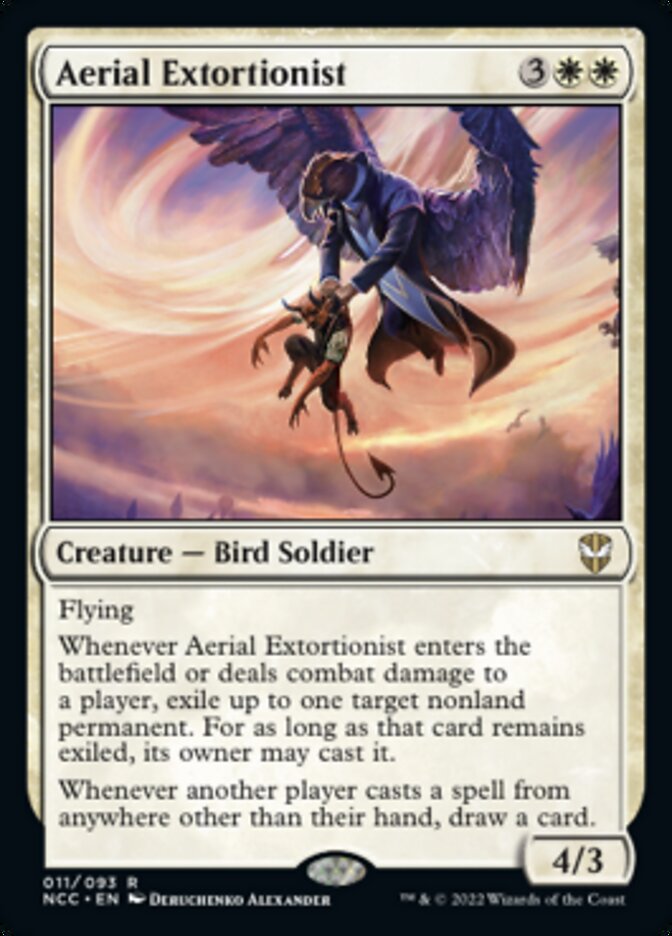
One of the hallmarks of a well balanced flicker strategy is the ability to play as a midrange deck – one that can play effectively in both an offensive and defensive capacity as necessary. Lyev Skyknight certainly fits this bill, if a bit obtuse at first glance. Aerial Extortionist is a little easier to parse in this context, and might be one of the better examples of this philosophy in action. On defense, it flickers to temporarily remove problematic permanents and stabilize the board. When we need to turn the corner and get aggressive, it presses that advantage by triggering again on combat damage. Setting aside completely the cards that it will draw us with its second ability, this is a tremendously flexible card that’s powerful both on offense and defense.

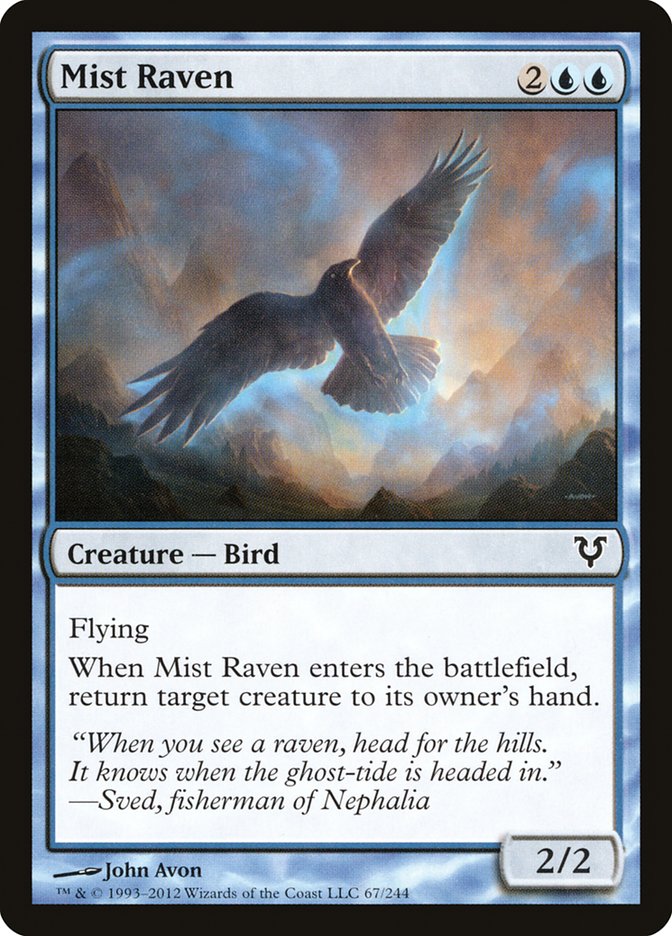
When push comes to shove, any creature in a flicker deck can be a good blocker. Flickering our blocking creatures will not only remove them from combat, but also leave our opponents creatures still considered blocked so we don’t take damage. The real trick is finding those creatures that are good attackers, or rather, can attack profitably – not everything needs to be a high-power efficient threat. The focus is finding those creatures that can reliably make it through for consistent damage. When sifting through the vast annals of creatures available to us, prioritizing creatures in this vein is important. A lot of the effects that we want when our creatures enter the battlefield are variations on a theme – which is to say that a desired effect, or a similar effect, shows up on all kinds of creatures with all kinds of stat lines at all kinds of mana values. It’s the difference between sleeving up a Man-o-War or a Mist Raven, essentially, and I’d pick Mist Raven nine times out of ten. Sometimes, though, the practical differences can be a little harder to parse.
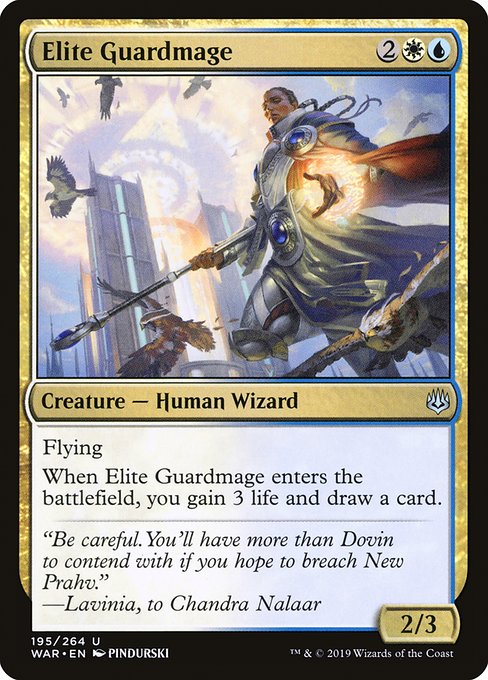
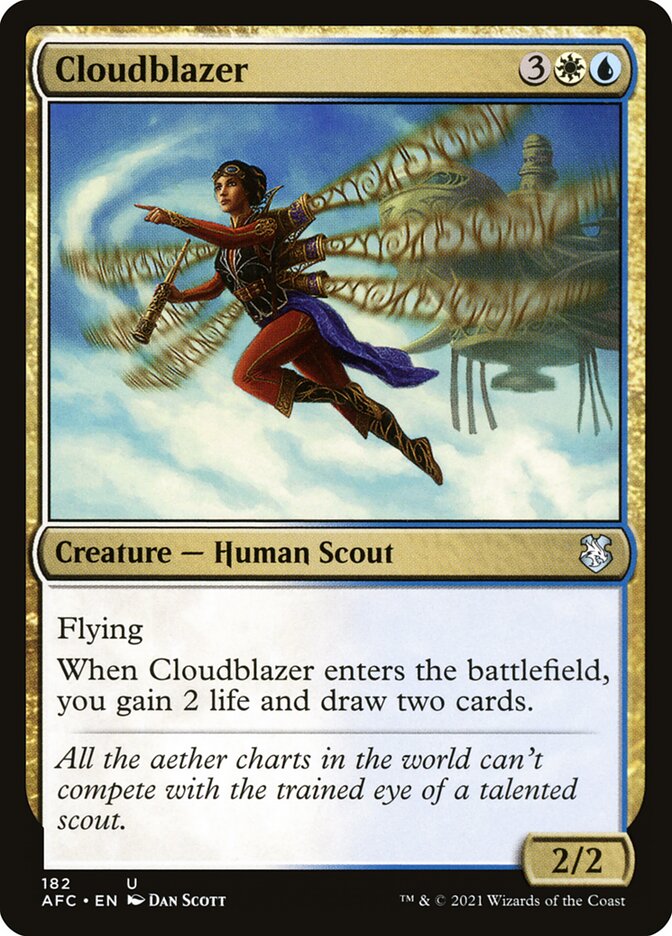
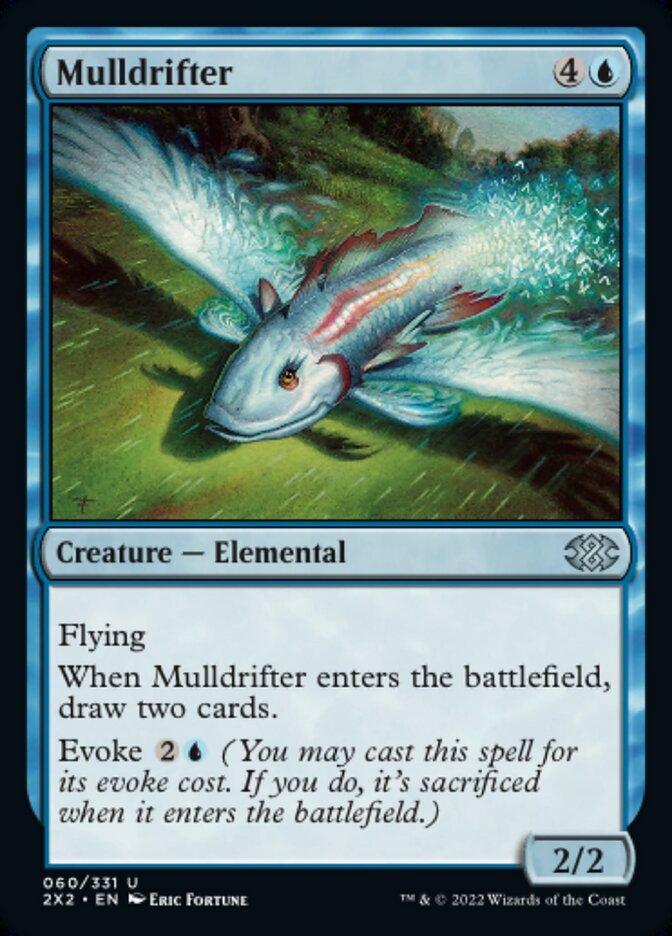
A great case study here involves thinking through whether we want to play a Cloudblazer or an Elite Guardmage in our hypothetical flicker deck. Sure, Cloudblazer draws an extra card, but gains one fewer life, costs one more mana, and has one fewer point of toughness. According to EDHRec, Cloudblazer is currently in almost 17,000 decks, whereas Guardmage is in only around 6,000 and I feel that it’s because when people are building decks that want this kind of effect, they see that Cloudblazer provides an extra card and call it there – when the trigger is the priority, it seems simple. For two cards that are so similar, I actually strongly believe that they are each trying to accomplish different goals. Drawing cards is sort of the baseline of how we generally assess card advantage, and there are many creatures that do this. Even next to Mulldrifter, probably its closest real analog, I think that Cloudblazer still comes up short simply because we will generally have the ability to evoke a Mulldrifter and flicker it for four or five mana, and net twice as many cards. Mulldrifter is a much less impressive card to cast when we are footing the entire bill of five mana, and Cloudblazer isn’t much different. Elite Guardmage, on the other hand, reads less like a passive card advantage piece and much more like a card that wants to attack. Drawing one card versus the two of Cloudblazer is certainly a detriment, but Elite Guardmage is much more relevant on the battlefield. Gaining three life rather than two seems mostly insignificant, but as a midrange deck, we are well positioned to aggressively use our life as a resource. Picking up a few extra points grants some very real freedom to how we can navigate combat. Perhaps the biggest point in favor of Elite Guardmage, though, is the extra point of toughness. Being able to attack through or block two-power creatures (of which there are a tremendous amount that see play in Commander) is a bigger boon that would appear at first blush. Whether it’s attacking or blocking, Cloudblazer can (and often does, in my experience) get blanked in combat by many simple value creatures, and Elite Guardmage is at much less risk. If you’re just looking to throw something down on the battlefield and target it with your Soulherder triggers, Cloudblazer has an edge, sure, but I think that would be leaving a lot on the cutting room floor.
Nuclear reacter
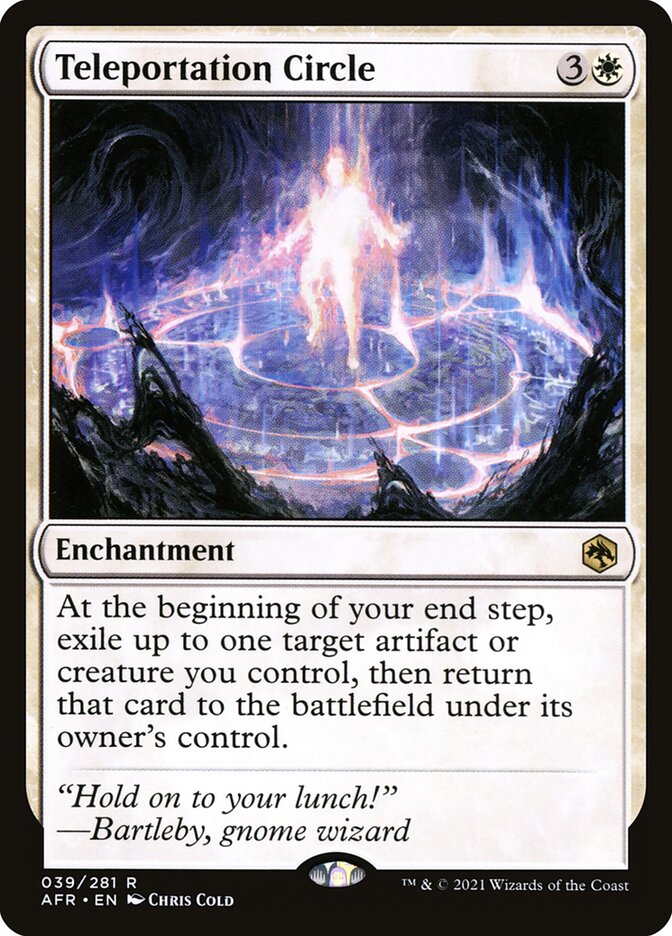
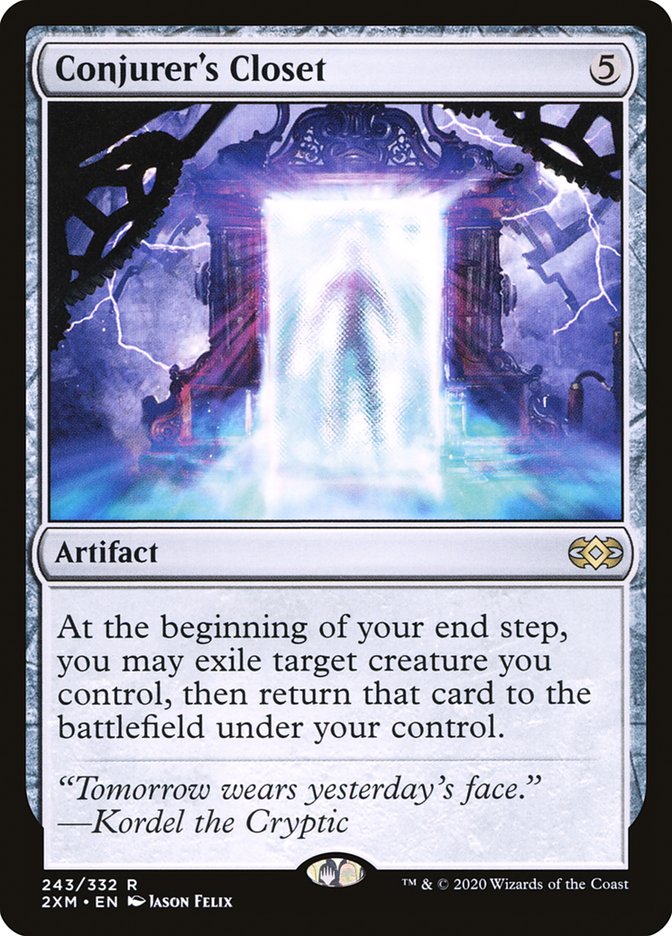
This may be a more controversial perspective, but I don’t really think that cards like Teleportation Circle or Conjurer’s Closet are worth playing in most flicker decks. Having these cards to consistently flicker our creatures certainly seems good on paper as value over time, but in reality it’s not so clear cut. When we hit the end step and our Teleportation Circle trigger goes on the stack, we declare our target and pass priority. This gives our opponents a beneficial window to interact, and is my biggest issue with this kind of on-board tool; it’s a flashpoint that our opponents can plan around. I think this kind of strategy is much better positioned when we are not telegraphing intentions through on-board triggers and forcing our opponents to play into our more powerful reactive flicker elements on the fly. To harken back to the earlier point about being able to assume an aggressive role, the tempo gained in these spontaneous interactions can be quite valuable.
Let’s say that we put an opponent in a position where they feel as though they need to cast a removal spell on one of our creatures, and we respond by using a flicker spell targeting that same creature. While we are interacting one-for-one with our spells, the effect gained by our creature returning to the battlefield breaks that parity in our favor. We blank the removal and come out ahead. Using our flicker effects proactively opens us up to our creatures being removed in response, and would require us to have multiple avenues of interaction or additional resources to not come out behind. Additionally, when we are proactively flickering our creatures, we telegraph what cards we are prioritizing and give better context to how our opponents use their interaction and craft their game plan. If we have a Mulldrifter and a Solemn Simulacrum on the battlefield and choose to flicker the Solemn Simulacrum on our end step rather than the Mulldrifter, a savvy opponent can reasonably assume that mana is a more valuable resource to us than raw cards, and may prioritize plays that aim to pinch our mana.
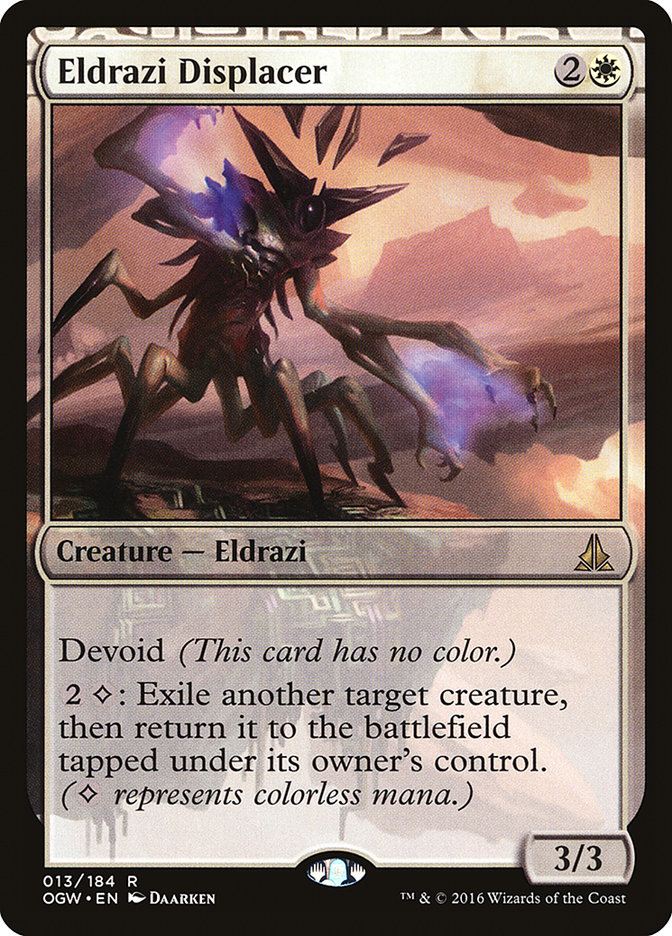
All that said, I don’t think it’s reasonable to eschew all on-board flicker effects because there needs to be something to take the pressure off of our flicker spells. I do think, however, that we should prioritize those that can function at instant speed. While they are still known quantities, forcing our opponents to take all of these factors into account muddies the decision-making process in real time, and it is easy to engineer scenarios where they will underestimate how effectively we can react. With an Eldrazi Displacer in play, our opponents can see that whenever we have the requisite mana available we can flicker our creatures. Showing our opponents that we can flicker our creatures for three mana will, in many cases, register that amount of mana in their mind as a relevant breakpoint when monitoring our resources. By going below that resource threshold where we can continue to activate our Eldrazi Displacer, we can signal that we are shields-down and bait out interaction from our opponents, which we can then follow-up with one or two mana flicker spells from our hand.
I strongly believe that Commander is at its most compelling when resources matter. When the amount of cards we have in hand or the amount of mana we have access to is finite, it shifts the scope of how we have to play the game – the situation we just discussed with Eldrazi Displacer is a good example of this and how we can shape or provoke interaction based on the perception of limited mana. This creates an environment where we have to play the game deliberately and with clearer intention. These are positive things – when resources matter, decisions matter, and consequences of those decisions have a meaningful impact on the game as a whole. When players start running out of resources as the game progresses, those that manage them most effectively start to pull ahead and create an organic path for the game to end. I guess that this is just a really long and pedantic way to arrive at one final point that I wanted to make on this topic – creating spots that provoke interaction from our opponents that result in a net benefit for us helps the game arrive at that point where resources begin to deplete, and massages the game’s trajectory towards an ending. Whether we ultimately win or not, we are hopefully providing the space for our opponents to get a good experience out of the game and the space to express themselves through their deck and gameplay.
What does this all even mean
So to boil all of this down a little bit, I think there are very clear incentives for cleaning up how we approach flicker decks. Tightening things up to the point of being able to interact within more meaningful spaces in-game, alongside clear intention with how we interact can go a long way towards making games run a little smoother. Not only that, but we can do it in a way that doesn’t monopolize game time and keeps everyone involved and engaged. I think that’s really the most important thing. No one wants to get up from a game without feeling as though what they were doing mattered – the knowledge that my game actions contribute meaningfully to the final outcome of the game is something I value highly in my own experience, and when sitting down with an untrusted playgroup, I’d want to extend that same courtesy to my opponents.
 commander, dear reader